Category: Facebook posts

  • Eagles to Dragonflies

    Eagles to Dragonflies

    Facebook post #026 (Jul 2020)

    Aero-engines played a big part in my Grandad‘s working life. He worked for the Air Ministry at the start of the war, and had to drive around the Midlands inspecting Merlin production, probably at the 21 shadow factories operated by Alvis. One was the peacetime producer of Tizer soft drinks! I remember a story about him stopping at a phone box to warn a test facility of his own approach. Health and safety rules prohibited running more than 8 engines at a time: as he arrived he would hear 8 engines slowing up, leaving the permitted 8 running. As he drove away, he would hear the second bank starting up again.

    Grandad mistrusted seatbelts as he once had cause to leap across to the passenger seat when a tank transporter (pic1) took out the driver’s side of his car, during the blackout.

    Diamond T
    Diamond T Tank Transporter (my photo)

    At some point, he transferred to Alvis, who were making and repairing Rolls Royce V12 Merlin engines (pic2), as used in Spitfires and Lancasters (pic3).

    This was in a new 1936 plant intended first for French engines under licence, and then for their own Leonides design. The men from the Ministry changed their minds on both designs, and instructed that the first batch of Leonides engines be destroyed. Grandad had them bricked up at the back of the factory instead…

    Alvis Leonides
    Alvis Leonides (my photo)

    I know that he went to work in Coventry in April 1941 after it had been flattened in the air raids, and I’ve heard the stories about people working in roofless factories with salvaged machine tools to keep production going. But I was surprised to see – last year at Coventry Transport Museum – an enlargement of a German reconnaissance map clearly showing the aero-engine factory.

    German reconnaissance map showing Alvis, Coventry
    German reconnaissance map showing Alvis, Coventry (my photo)

    I subsequently discovered that the Germans were able to eliminate the plant with extraordinarily precise and destructive bombing. I then found out that the bombing was better than the intelligence: the target had actually been the car plant, the aero-engine plant having been built in the empty space to the north! So that put pay to any further production of the lovely pre-war cars like the Speed 25 and Silver Eagle.

    Alvis Speed 25
    Alvis Speed 25 (my photo)

    In 1944, the government allowed Alvis to start planning for peace, and the Leonides was dusted down. Those early Leonides units were used in the first hovercraft and early helicopters.

    They did eventually make cars after the war but the main business was armoured cars.

    Alvis Saracen
    Alvis Saracen (my photo)

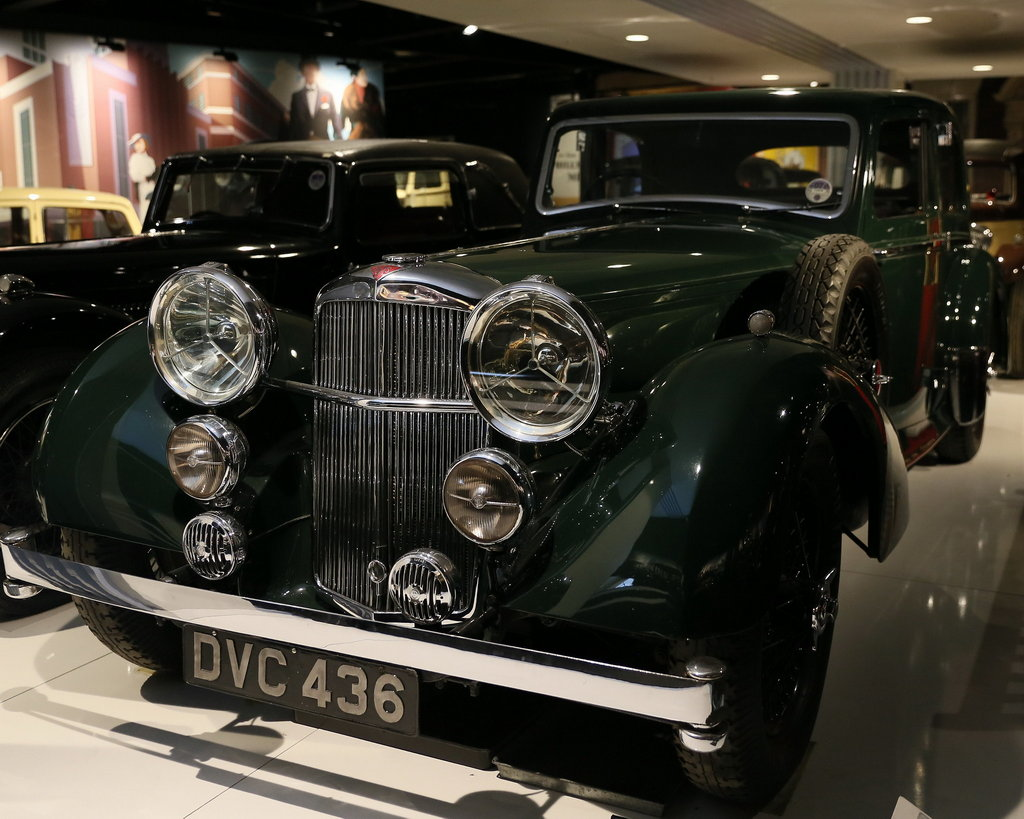
    When BAe had finished with the name, Alvis was bought by enthusiasts, who started on a mission to complete the batch of cars (and engines) originally planned for 1939!

    Alvis 4.3-litre Continuation Series
    Alvis 4.3-litre Continuation Series (my photo)
  • Socks on the Golf Course

    Socks on the Golf Course

    Facebook post #025 (Jul 2020)

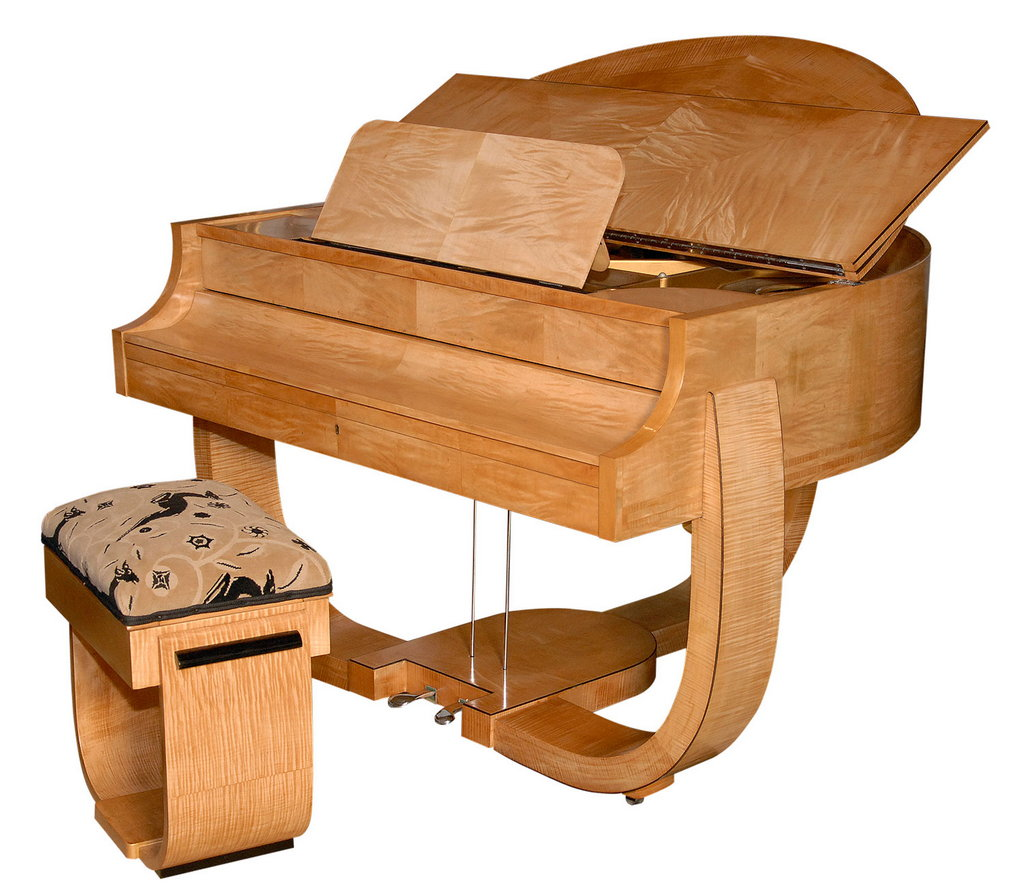
    This is Phyllis (and one of the pianos her family made).

    Strohmenger Art Deco Grand Piano (1930)
    Strohmenger Art Deco Grand Piano (1930)

    You should feel sorry for Phyllis because she had her 21st birthday present stolen while she was dining. The family lost £1.2m (in today’s money) in the 1927 robbery in Sunningdale. Then she married my cousin.

    She had already stunned the world by wearing socks on a golf course (as one of the famous golfing sisters).

    Phyllis Strohmenger golfing
    Phyllis Strohmenger golfing (my photo)

    According to a website I’ve just found, she went on to be renowned for skating, skiing and toboganning. And bred champion Irish Wolfhounds.

    Phyllis Strohmenger with dog
    Phyllis Strohmenger with dog

    And raced a Bentley in the Monte Carlo rally. And lived to 92 (still driving), surrounded by haute couture, fine art and pictures of horses.

  • Weaving Not Drowning

    Weaving Not Drowning

    Facebook post #024 (Jul 2020)

    ‘Weaver’ is not a trade name – in Britain, that is Webb. Rather, the name is thought to derive from the River Weaver in Cheshire. Pictured is the church at Weaverham, possibly the centre of the universe… before it shifted to Sutton Coldfield. The C15 Thomas De Wever sounds quite grand but in Sutton (C18-C19), we were agricultural labourers, living in ‘Blabbs’ – which seem to have been a group of shacks named after the sound of the brook running past. Nowadays, there’s a car dealership.

    Sutton Ford
    Sutton Ford

    My 3rd gt-grandmother Rebecca can’t have had an easy life – she seems to have fallen out with her father (who ended his days in the Aston Union Workhouse), and was a domestic servant from the age of 12. She never revealed the father of her son. However, she met a good man, who took them both in, and she lived until the age of 95. My grandad’s sister remembered her well and was therefore able to pass on mid-C19 reminscences of the time long before cars! Her son worked his way up to head gardener at Middleton Hall near Tamworth, which is now (normally) open to the public.

    Middleton Hall
    Middleton Hall

    His children did well, and remained in the Sutton area. But the big surprise has been the number of coal miners in the family that have shown up in the research. There were small coal seams around Tamworth and West Bromwich, but the family followed the work to the West Yorkshire coalfield, and, by 1939, many of Rebecca’s brother’s descendants were to be found in the Wakefield area. Others remained in the industrial West Midlands – including Small Heath of ‘Peaky Blinders’ fame, or emigrated. The Barnes family remained well-off farmers in Staffordshire. One family member was an engine driver, another wrote a book on satire!

  • Boot, Boat and Goat

    Boot, Boat and Goat

    Facebook post #023 (Jun 2020)

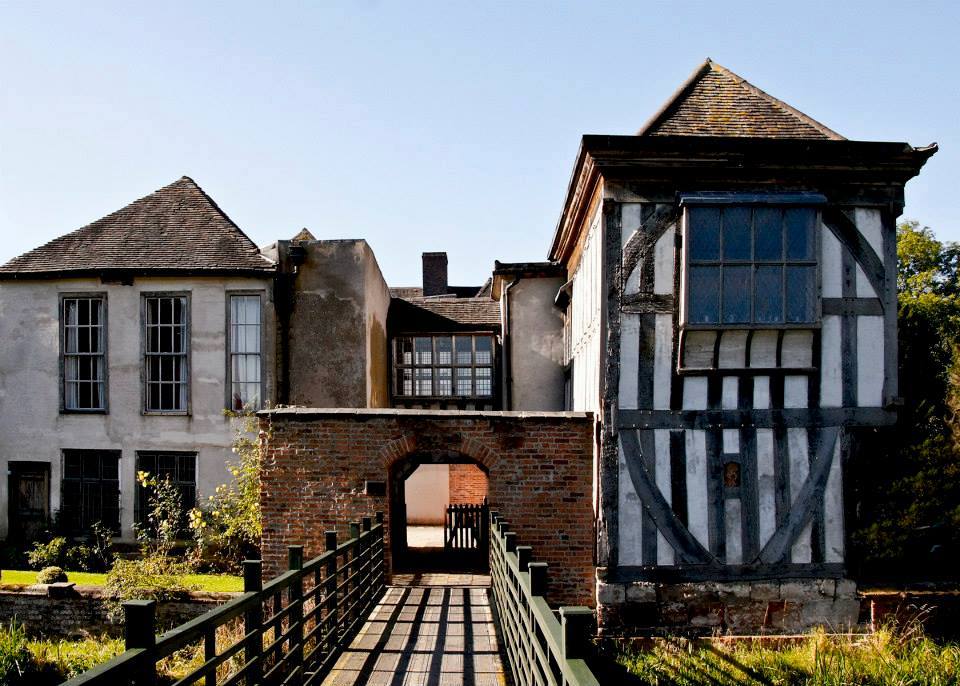
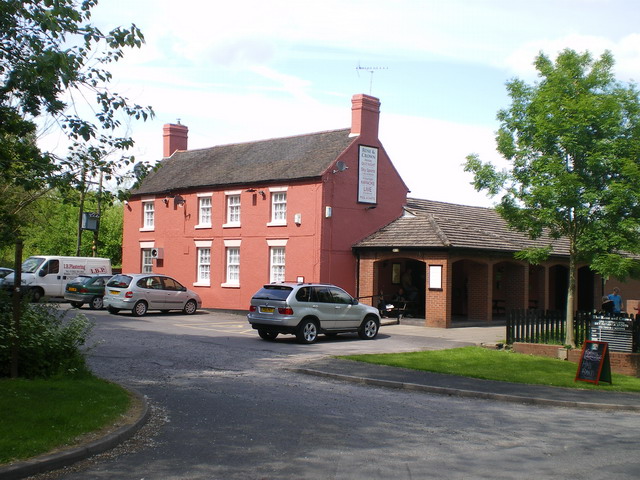
    To those awaiting the reopening of the Great British pub… I didn’t know we’d ever had a pub in the family but it turns out there were many. Pictured is one of a handful that will hopefully reopen soon – the Rose & Crown in Stirchley, Shropshire.

    Luck ran out for most of them over time, a couple due to road improvements, and quite a lot of Birmingham has been knocked down… The unluckiest was probably the Plough Inn in Gillingham, Kent, which was bombed in 1941, killing 2nd cousin Fred. It was rebuilt, and knocked down again in the early C21.

    The Rose and Crown, Stirchley
    Rose & Crown, Stirchley (Richard Law on Geograph)

    Others included:

    * Travellers’ Inn, St Helier, Jersey

    * Goat, Liverpool

    * Cuckoo Vaults (or predecessor), Liverpool

    * Rodney Inn, Little Baddow, Essex

    * Greyhound, Blandford Forum, Dorset

    * Smithfield Hotel, Lichfield, Staffordshire

    * Bordesley Park Tavern, Deritend, Birmingham

    * White Hart, Ingatestone, Brentwood, Essex

    * Kingfisher, Biggin nr York

    * White Lion, Doncaster

    * Horse & Groom, Ripple, Worcestershire

    * Rose & Crown, Ledbury Road, Hereford

    * Boot Inn, Sutton Coldfield

    * White House, Gillingham, Kent

    * Ram’s Head, Sowerby Bridge, Yorkshire

    * Rozel Bay Hotel, Jersey

    * Wellhead Tavern (latterly Hare of the Dog), Birmingham

    * Tyburn House, Erdington, Birmingham

    * 81 Highgate Road, Sparkbrook, Birmingham

    * Boat Inn, Minworth, Sutton Coldfield, Birmingham

    * Horseshoe Inn, Stone, Staffordshire

    * White Lion, Doncaster, Yorkshire

    * Wilton Arms (latterly Captain Cook), Fulham, London

    * The Inn, Clanfield, Oxon (boarding?)…

    …and the pianist at the Palace Hotel, Southend-on-Sea, Essex…

    …and various brewery workers, including a drayman at Charington’s Blue Anchor Brewery, Mile End, London

  • Rawalpindi or Bust

    Rawalpindi or Bust

    Facebook post #022 (Jun 2020)

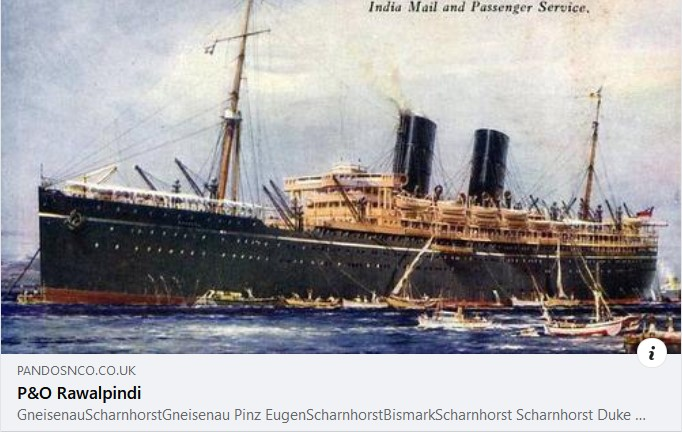
    So, there are nearly 50 ships researched and pictured in my family history as our people travelled or served upon them. SS Rawalpindi is interesting as cousins on both sides of the family travelled to India on her in the 1920s (here and here).

    She was requisitioned in 1939, with most of her crew. In November of that year, when on convoy protection duty off Iceland, she “had the great misfortune to encounter the mighty German battle-cruisers Scharnhorst and Gneisenau”, with predictably sad results for the brave crew, battle ensigns hoisted.

    SS Rawalpindi

  • What the Dickens?

    What the Dickens?

    Facebook post #021 (9 Jun 2020 – 020 was a progress update)

    Today is the 150th anniversary of Charles Dickens’ death. I’ve mentioned him more often than any other person in my family story – he was an imperfect man but he gave Britain a conscience, he entertained, he vividly described workhouses and rookeries. He wrote of Crystal Palace and the Niagara Falls. And he lived in the same streets, travelled on the same ships, and his son fought and died alongside ours.

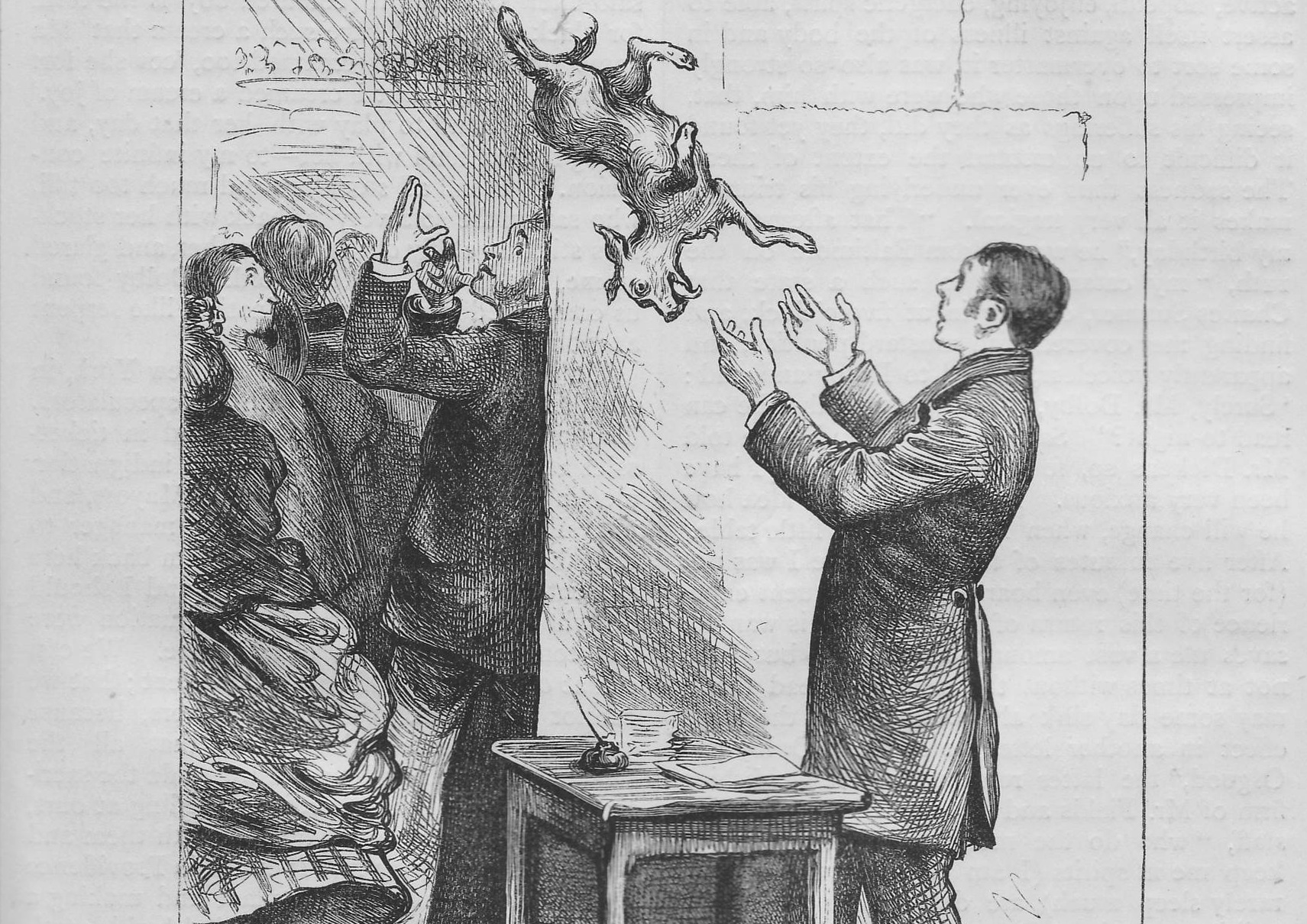
    Here is a picture of a dog being thrown out of one of his readings. It was as well, he says, that he was reading a comic part at the time, as he was seized by a paroxysm of laughter after the dog had reappeared in an entirely new place amongst the audience, staring intently at him.

    Dickens
  • QM QED

    QM QED

    Facebook post #019 (May 2020)

    Another branch of the tree scaled. So, not only did my Gt-Grandfather Squire hold a patent but so did both his brothers, and all in quite separate fields. Sibling rivalry! By force of numbers, the coal miners took a long time to go through, but my favourite waste of time has been recreating Alfred and Elsie’s holiday of a lifetime, in 1938. I’ve found the liners, the Pullman trains and the pioneering aircraft they would have used, the sights they would have seen, even the music they listened to, the films they saw, and the meals they enjoyed together.

    Updated on post #057 and post #058

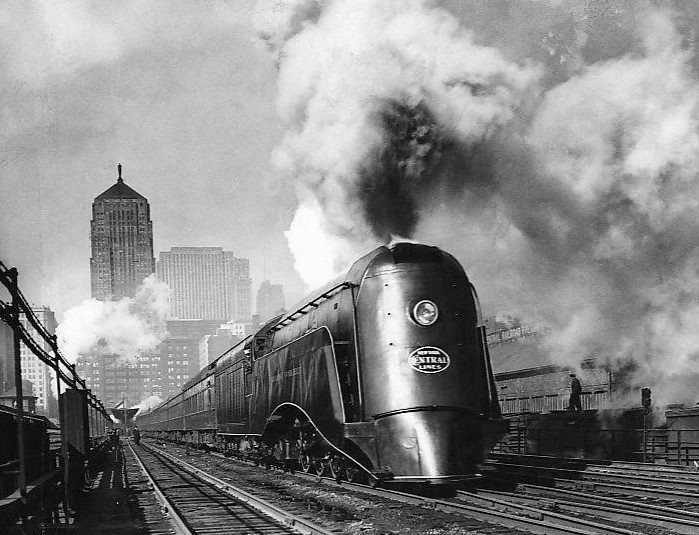
    RMS Queen Mary
    QUEEN ELIZABETH . CHERBOURG . 1966 .

  • Diaspora

    Diaspora

    Facebook post #018 (May 2020)

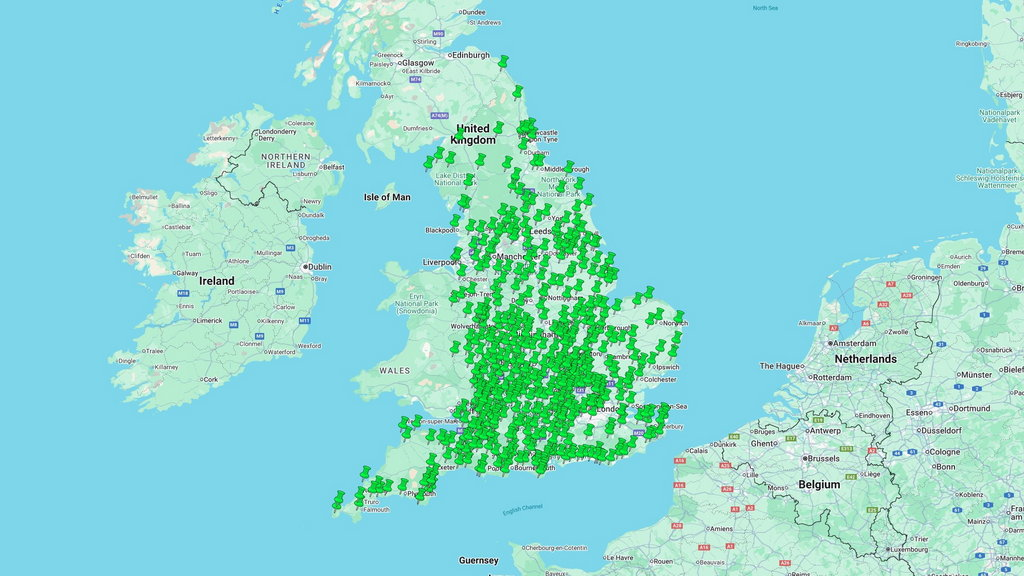
    Turns out that the photos I’ve taken out and about have been quite handy in the family history. I’ve managed to photo some of the family’s actual houses, churches and workplaces, by complete chance, sometimes in towns where I had no idea we had a connexion. I’ve linked from the family story (1st to 4th Gt Grandparents) to my photos in: Agra (India), Alderminster, Alresford, Alton, Atherstone, Axbridge, Aysgarth, Baldock, Bangalore (India), Barnard Castle, Barnsley, Bath, Berkeley, Bewdley, Bexhill, Birkenhead, Birmingham, Blackpool, Blandford, Bognor, Bolton, Bourne, Bracknell, Bradford, Bridgwater, Bridport, Brighton, Bristol, Bromsgrove, Bury St Edmunds, Cambridge, Carlisle, Chatham, Chelmsford, Chelsea, Cheltenham, Cirencester, City of London, Clerkenwell, Coalbrookdale, Colchester, Coleshill, Croydon, Dagenham, Daventry, Dawley, Derby, Doncaster, Dover, Driffield, Droitwich, Dudley, East Ham, Eastbourne, Eastleigh, Ellesmere, Ely, Evesham, Fareham, Faversham, Folkestone, Gateshead, Gloucester, Grantham, Guildford, Halifax, Harrogate, Henley-in-Arden, Hereford, Hexham, Horncastle, Huddersfield, Hull, Hyderabad (India), Hythe, Ilford, Ilkley, Ipswich, Istanbul (Turkey), Jarrow, Keighley, Kendal, Kew, Kidderminster, Lambeth, Lancaster, Leamington Spa, Leeds, Lichfield, Lincoln, Liverpool, Lyme Regis, Lymington, Maidstone, Maldon, Malvern, Manchester, Mansfield, Middleham, Middlesbrough, Minchinhampton, Much Wenlock, New York (USA), Newcastle upon Tyne, Napoli (Italy), Newport (Salop), Northampton, Northleach, Olney, Peterborough, Petworth, Pitchford, Poole, Portsmouth, Ramsgate, Richmond (Surrey), Richmond (Yorkshire), Reading, Ripon, Romsey, Rotherham, Rugby, Ryde (IOW), Saffron Walden, Sheffield, Sherburn-in-Elmet, Shrewsbury, Skipton, Soho, Solihull, Southampton, Southend, Southwark, St Albans, St Helier (Jersey), St Ives (Cambs), St Neots, Stafford, Stockton, Stoke, Stone, Stratford-upon-Avon, Sturminster Newton, Sutton Coldfield, Tadcaster, Tamworth, Taunton, Thrapston, Tintagel, Tipperary, Tonbridge, Towcester, Tring, Uppingham, Upton-upon-Severn, Wakefield, Walsall, Waltham Cross, Warwick, Westminster, Weston-super-Mare, Whitby, Whitchurch (Salop), Wigan, Woking, Worcester, Worthing, Woodstock, Worthing, Wycombe, York! And the ones I’ve missed…

  • Little’s Little Ship

    Little’s Little Ship

    Facebook post #017 (26 May 2020)

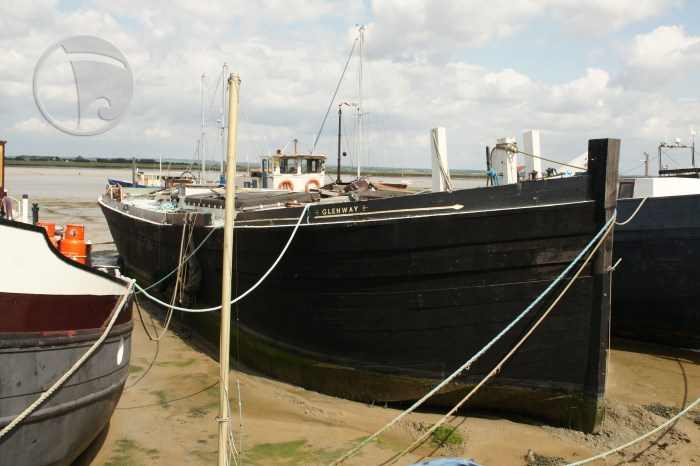
    Today is the 80th anniversary of the Little Ships first sailing to Dunkirk. This is my family’s surviving contribution, the Glenway, built and operated, appropriately, by my Little cousins. She was towed across the channel from Ramsgate by the tug ‘Crested Cock’ with a consignment of bread, munitions and medical supplies for the troops. She was spotted, by an anti-submarine vessel, on the beach, with 190 battle-weary troops on board, unable to re float and with her engine out of commission. The Captain armed her to resist enemy air attacks, refloated her, and sailed home, laden with soldiers of the 27th Field Regiment, Royal Artillery. Sadly, twenty of them died of their wounds during the sixteen-hour crossing. When the Glenway reached Dover, she was picked up by a passing tug and towed into port.

    Glenway
    Glenway
  • Grim Up North?

    Grim Up North?

    Facebook post #016 (May 2020)

    This chapter of the tree has been long and difficult. My gt-gt Grandad moved to London, and I’ve now documented his mother’s family that he left behind in Barnsley. 37 coal miners and 3 others underground, a handful of labourers and mill and factory hands, and a coffin maker. One got 14 days’ hard labour for stealing a pigeon when he was 16. He was 5ft tall with red hair, knock-knees and a squint. One worked in the paper mill which was the backdrop for the film ‘Kes’. One died in an explosion at Wharncliffe Woodmoor colliery – the last major disaster in the South Yorkshire coalfield. One escaped to the Forest of Dean – where he was… a miner. One moved to Kent, where he was killed in a rock fall at Betteshanger Colliery, Deal. Five died in WWI, and one in WWII, where the explosions and the poison gas were deliberate.