A couple of weeks ago (post 35), I mentioned that my Gt Gt Grandfather, Henry Larard, married Fanny Mousley in Croydon in 1870. His mother was Harriett Little of the family who built and owned 24 Thames sailing barges, and whose nephew Ivo was a Flight Lieutenant on the ill-fated R-38 airship. Her mother was Rebecca Knight of the South London family described in post 33.
Fanny’s father was Thomas Mousley, a surgeon from Ellesmere, Shropshire (of a family rooted around Tamworth).
The Cambria Inn, Ellesmere, opposite where Thomas and Rebecca may have lived (my photo, by chance)
He trained in London, and eventually moved to Croydon. I recently learned from the son of a Mousley, that it’s pronounced ‘Mouzley’, with the first three letters like ‘mouse’.
One of her brothers, William was a railway contractor, and I managed to piece together some of his history from multiple sources, which lined up with census records showing where he was living. He built the Ely and St Ives Railway, an extension to the Wolverhampton Tramways, the first phase of Derby Tramways…
Derby Tramway c. 1895 (Valentine Postcard)
…the extension of the (preserved) Bridport branch line down to the harbour, the (partly preserved) Skipton to Ilkley Railway, the Bourne to Saxby railway (including Toft Tunnel), the Weston-super-Mare branch and loop, and the Norfolk and Suffolk Joint Railway! Another brother went to the USA and his descendants tell me that the family were railway pioneers over there too.
Lobb Ghyll Viaduct on the Skipton-Ilkley Railway (TJBlackwell on Wikipedia)
William’s son, Henry, worked for the Ottawa-Toronto Railroad. In fragile health during WWI, he became a full time naturalist. At his death in 1949, Henry Mousley had published 131 scientific articles in Canada, the United States, and England, including 32 on species of orchids he had discovered. ‘His contribution to knowledge of the flora of Quebec is especially remarkable when it comes to orchids in southern Quebec, where he studied their morphology, ecology, and distribution’. He left photos and specimens to national museums and universities in Canada.
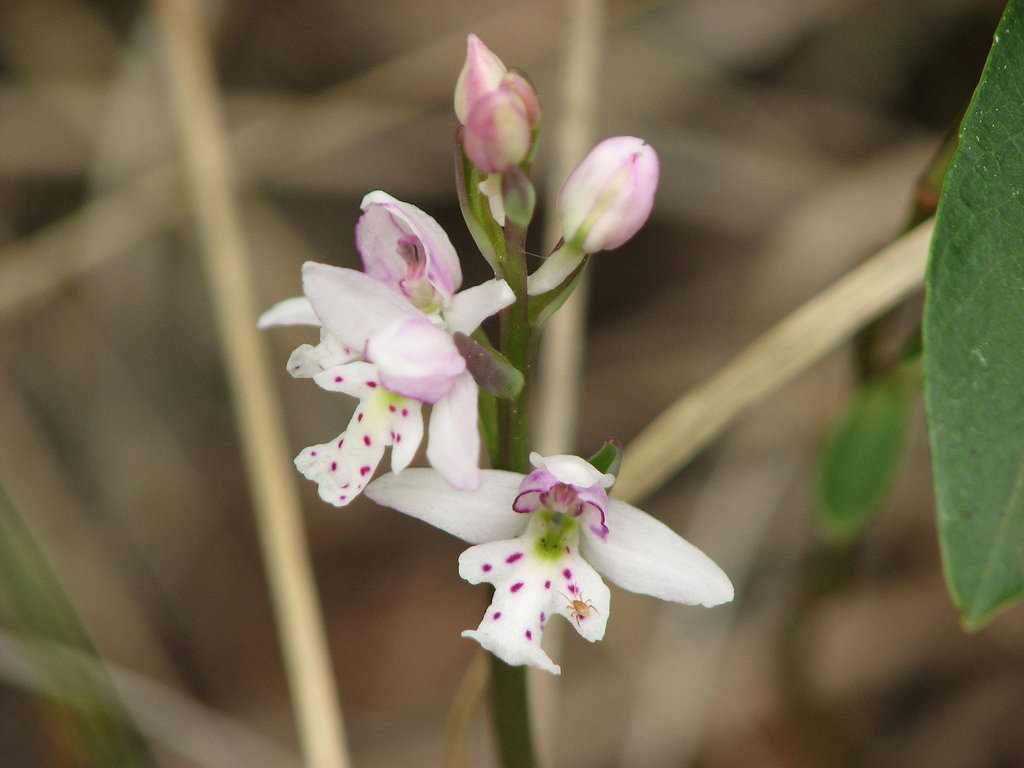
Amerorchis Rotundifolia, discovered by Henry Mousley
Why Swindon? For twenty years now! This one is mainly for my children and other close relatives on Dad’s Dad’s side. [It should be updated to cover the whole tree.]
So Facebook has started to hide some of my posts, even from me. I’ve found them all and backed them up, but if I reference an old one, and you can’t see it, please let me know and I will tag you.
I mentioned last month that I will be surveying my findings geographically, and I thought a quick summary of Why Swindon? at this point might also tie things together for family members
In Dad’s Dad’s line: John and Margaret James were in Oxfordshire, not too far from Swindon. But, for reasons unknown, their son William – an agricultural labourer – moved (after Hastings!) to Sutton Coldfield (near Birmingham), where he married local girl Rebecca Weaver, who already had a son, John, by father unknown (see post 24). He brought John up but he kept his surname.
John married Caroline Barnes of a well-off Staffordshire farming family, her parents probably moving in the same circles in Worcestershire and Staffordshire. But Caroline’s father didn’t inherit and became a Post Office clerk and had moved into Peaky Blinder country. They still had some pretensions though, it seems – there is a rumour that John and Caroline met at Middleton Hall where he worked as a gardener, and she read novels in French!
The Lamberts (post 27) and Cartwrights (from whom Captain Webb was descended) (post 31) were Shropshire families, as were the Wilsons. Richard Barnard (from the Essex family introduced in post 28), ran the pub in Shropshire pictured in post 23, after he had married Elizabeth Wilson. But they married in London, and their daughter was born in Guernsey! However, she was brought up close to Daniel Lambert in what is now Telford. This couple also married in London and travelled around – showing up in Barrow-in-Furness, before he took up teaching in Dorking, and then relocated to a school in Sutton Coldfield.
My Great-Grandad Arthur Wheaver (son of John and Caroline) was also a teacher, and married Daniel’s daughter Alice. My Grandad married a Larard (post 35), and they moved just far enough outside Sutton for my parents to meet – my other Grandad having taking up a post at Birmingham University. Dad worked locally but moved to South London (post 33) and then to the Bucks/Northants border, for work. I got a job, house and wife not far away, and commuted to London for a while. This gave me the experience to eventually relocate to Swindon for a job at Nationwide.
(The family pages include a summary tree of all members of each part of the family in Chapter 4, and Chapter 5 includes a directory for each part of the family of where hundreds and people were living – and what they were doing – in 1939.)
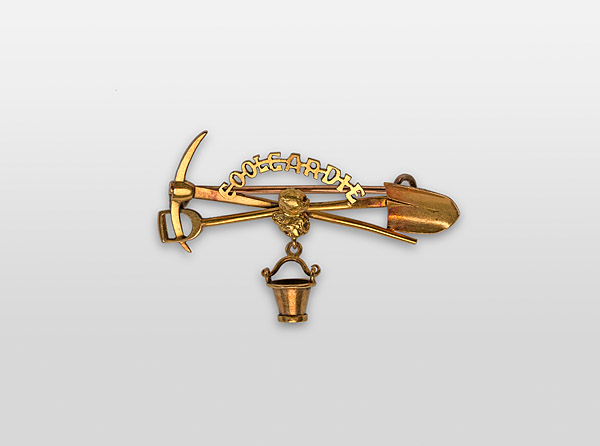
So, a couple of weeks ago (post 32), I mentioned that the Larard family had been involved in woolcombing and silk weaving, characteristic of the Huguenot and Walloon refugees of the time. Edward (1762) had moved to Hull, and his son Thomas had started a watchmaking business there in 1812. This occupation is also characteristic, and it is known that fathers sometimes funded the apprenticeships of their sons. I described the Hull business but didn’t mention that Alfred, brother of Alderman Frederick of Hull, had emigrated to Australia, taking the trade to the centre of Melbourne. The family business made goldfield jewellery (pictured), and even branched out in to bicycles (his advertisement pictured).
Larard Coolgardie brooch
Back in England, Edward’s brother was Timothy (1739), a silk dyer. His son Francis (1777) moved to London at the time the silk trade was booming there. By 1818, he was a boot maker in Clerkenwell (where my Dad worked for a while in the 1970s, as did I – briefly – in the 1980s). The Old Bailey records show that someone stole a pair of boots from a nail outside the shop: Francis gave chase and apprehended the felon on Clerkenwell Green. Francis and his wife Elizabeth were married at St Giles, Cripplegate (see my photo) and are buried in the famous Highgate Cemetery, leaving significant bequests.
Cripplegate, St Giles (my photo)
Clerkenwell (see my photo of contemporary Session House) was big in the watch trade and I suppose Francis paid for his son James (1810) to learn the trade, as his first cousin (once removed, so a generation older) in Hull had a generation earlier.
Clerkenwell, Middlesex Sessions House (my photo)
James married Harriett Little, and they lived near Vauxhall bridge with seven children. In 1868, James, at least, was in Canada, having emigrated on the SS Bellona.
JAMES LARARD from London, England. At King Street, Oshawa.
IMPORTER AND MANUFACTURER OF CLOCKS, WATCHES AND JEWELRY
London made Lever Watches of the Best workmanship, IN GOLD AND SILVER CASES. 18 & 22 Carat Gold Wedding Rings and Keepers. London made Gold Chains, Alberts, Lockets, Brooches, Earrings, Scarf Pins, &co. Extensive assortment of Spectacles and Eye Glasses, also Colored Glasses. A large stock of Double Crystal Watch Glasses, first imported into Canada. French and American Clocks. Every Description of Chronometers, Duplex Lever and Verge Watches repaired in a superior manner.
The Public are Invited to Inspect the $20 Lever Watch, in Stout Sterling Silver Cases, the Cheapest Watch in Canada.
Larard Brothers bicycle advertisement
After a few years, James returned to South London – to the genteel suburb of Brixton. Of the sons, Francis was a watchmaker, who emigrated to a gold prospecting town in New South Wales; Henry carried on the clock and watchmaking business in South London. Reginald was a cabinet maker, and then a chemist. He emigrated to Australia and sold ‘Oogar Dang Water’, which later morphed into the well-known Kirk’s brand. By 1900, he was a gold prospector in Cue, Western Australia (the centre of the Murchison goldfields and the terminus of the railway from Perth.). Sidney travelled the world with the merchant navy, then came home and lodged with his brother Henry, and then emigrated with his brother Reg. He had been a banker, a leading light of the Chamber of Commerce, and Secretary of the Brisbane Club, excelling at tennis and golf.
Larard clock (family photo)
There is a lot more about this family, their trades and localities, and their English and Australian descendants, on the blog. There was a shocking accident in 1893 where three lads, including Sidney’s son George, were playing on a riverbank, looking at the remains of the Indooroopilly Bridge, which had been washed away in floods a few days earlier. They got into trouble: someone managed to rescue George with a rope; the others were lost. Such are the twists of fate.
So Henry (1841) was the son who stayed at home. He married Fanny Mousley at St John’s Church, Croydon in 1870 (see my photo). This was 101 years before my parents moved me to the same town, in blissful ignorance that our ‘midlands’ family had South London roots. I’m pleased to say that there is an example of a Larard clock in the family (pictured).
Church of St John, Croydon
Henry and Fanny had one child, Ernest, who – like his grandfather and his uncles before him, emigrated to try to better himself – this time to the USA. Like his grandfather, he returned to Britain – but to the Birmingham area, where his daughter married into the Wheaver family.
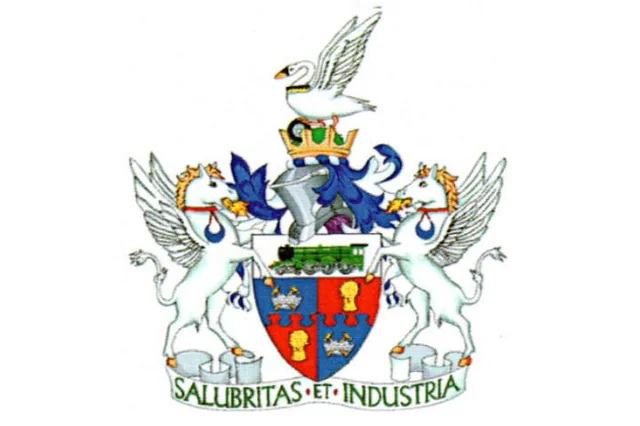
One of Ernest’s sons, (another Francis/Frank), was posted to Australia in the War (I think) and wrote home that he had seen a jeweller (in Perth?), sporting the same coat of arms as his own! Many years later, one of Frank’s children emigrated to Australia with her family, a fourth generation of globe trotters.
New! In around 380, a chap called Cunedda from Clackmannanshire was redeployed by the Romans from Hadrian’s Wall to put down a rebellion in what is now North Wales. When the Romans went home, he stayed – and stayed in charge, founding the royal house of Gwynedd. Wikipedia documents the next 23 generations of his descendants, to Cadwgan ap (son of) Bleddyn of Powys, born 1075. (Cunedda is one of those people who doesn’t need a surname, which is just as well, as they didn’t exist). By this time Powys was in the hands of the Marcher Lords, and the chieftains had lost most of their power.
Just a little earlier, the Saxon king, Edward the Confessor had given the scattered settlement of Weaver in Cheshire (see post 24) to a Norman nobleman (he liked Normans). The nobleman took the name of the locality and become a De Wever. This is recorded in the Domesday Book; Papal Bulls from a couple of hundred years later show that the land was still in the family.
Edward the Confessor – Bayeux Tapestry
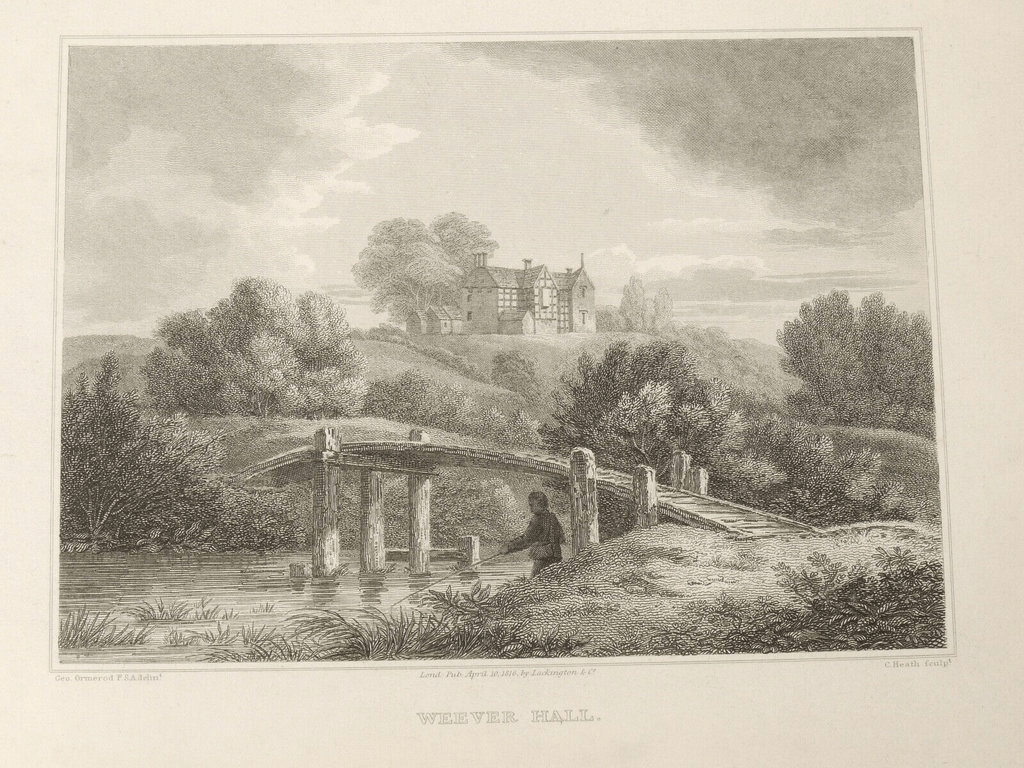
A large timber-framed manor house known as Weever Hall became the seat, with other family at Weaverham (as post 24). Some of the younger sons moved out to Shropshire and Herefordshire, forming a distinct branch of the family.
Weever Hall
Around the end of the C13, Cadwgan’s 4th great-grandson, Ieuan ap Madoc married a daughter of the Herefordshire Weaver family, and named his son Humphrey Weaver. This marked a shift away from a Welsh identity at just the time the nation was subdued.
Two hundred years later, Thomas and William Stanley led their army to the decisive intervention in the Battle of Bosworth which brought the Tudor dynasty to power, and probably a change of religion for the Weaver family. The Tudor monarchs were, incidentally, also descended from Cunedda. The Stanleys’ big brother John married the heiress of Thomas de Weever, and became master of Weever Hall. Meanwhile, The Herefordshire Weavers were still in the debatable lands.
In 1716, Samuel Weaver was born in Bewdley: tentatively, I think that he was my 7th great-grandfather. This week, Ancestry has updated my likely ethnicity, and for the first time, Wales and the marches are shown as separate and significant. The ‘h’ in my surname came in later (John Wheaver, the gardener – see post 24).
In 1620, Clement Weaver had been born in Glastonbury. He was an anglican, not a puritan, but he joined the Great Migration to the Massachusetts Bay Colony. He married a Quaker, fell out with the puritans, and moved to Rhode Island. Here he became a member of the House of Deputies, and founded a dynasty of his own. His farm stayed in the family for two hundred years. Other than those who anglicised Weber, every American Weaver is a descendant, and there was always a tradition of Welsh descent in every branch. Indeed, like those of many other names, it is probably one global clan.
In the early C20, the family decided to explore their history and deputed people to England to investigate. In 1928, they compiled a meticulously researched genealogical book. A newly unearthed digital copy provided the backbone for this post.
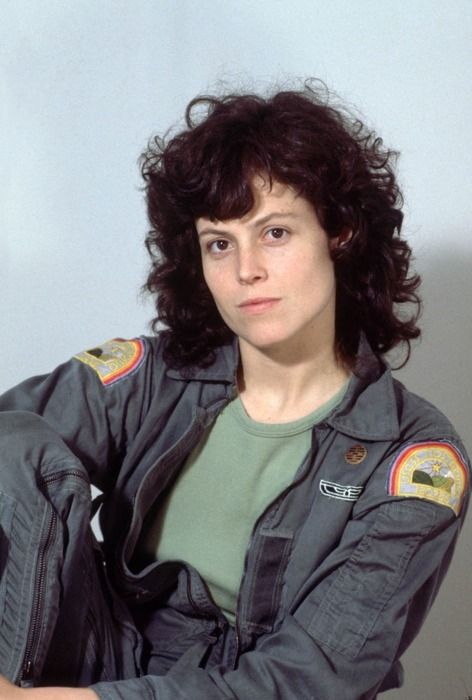
In 1986, Sigourney Weaver, of this parish, saved the world.
I’ve finished my survey of in-laws and of third cousins! To round off, I’m working on a geographic summary… Why on earth are Croydon and Barnsley so magnetic?
This week, Robert Harris announced his new WW2 novel, V2, featuring the world’s first long-range guided ballistic missile. This was the biggest thing ever to hit South London! (see my photo from last year). The area had been sporadically bombed by plane but the rockets brought terror. When I was young, a relative told me of the rough sound doodlebug V1’s made – and the fear when the fuel ran out and the engine stopped. But the V2 was supersonic and no one heard it coming. One hit Woolworth’s in New Cross and killed 168 people.
V1 and V2 Rockets
There were dozens of the Knight branch of my family living all over Norwood (Croydon and Lambeth) at the time – right underneath the onslaught. I worked out that 344 flying bombs fell on houses in their neighbourhoods (CR, SE17+ and SW2/16 postcodes), and 712 people were killed. 1600 houses were destroyed in the Borough of Lambeth, and 35,000 were repaired during the war. Properties were requisitioned and people billeted in Lambeth Rest Centres, and other people’s homes. Among the streets badly impacted were Tivoli Road. Gipsy Hill and St Clouds Road – all of them home to the family. So too was Knights Hill Square, where the charcoal burners’ cottages that had survived interwar housing development, were destroyed. St Luke’s Church, scene of dozens of family baptisms and marriages, was damaged; nearby Georgian homes destroyed. Norwood Cottage Hospital was damaged; so was the Cemetery.
Battle of South London (my collection)
Knight’s Hill was named after the family but my closest relatives came in from Dorking. Chawton House was the seat, and the owner gave £50 towards the fleet to defeat the Spanish Armada.
Chawton House
Our Solomon was a house builder though, rather than a house inheritor. On the whole the family was decidedly working class, the southern equivalent of the Barnsley Green’s in my ‘Kes’ post (#016). There were tram conductors, window cleaners, factory hands, clerks, carmen (think ‘white van man’). There were road repairers: one drove a steam roller for the council and I found a pic of the team. I think I detect a little pride in occupations like ‘public librarian’. One of the family worked as a porter at a railway station serving Crystal Palace.
Epsom & Ewell steam roller
I mentioned before (post #010) the importance of the Crystal Palace (see our page). There were six million admissions to the Great Exhibition (see our page), including train loads of working class Londoners (part of the Charles Dickens ‘heterogeneous masses’ (see post #021)). I managed to obtain a copy of the catalogue of thousands of the 100,000 items exhibited, including the Coalbrookdale swan fountain (see post #027). After Paxton moved the Palace to Sydenham, enlarged it, and set it in its own extensive pleasure grounds, the Crystal Palace dominated the area. The self-esteem of the area rocketed, and it provided considerable local employment. Not only was there motor racing but, vitally, the oldest and finest football club in the world was established at Crystal Palace.
Crystal Palace Fire, 1936
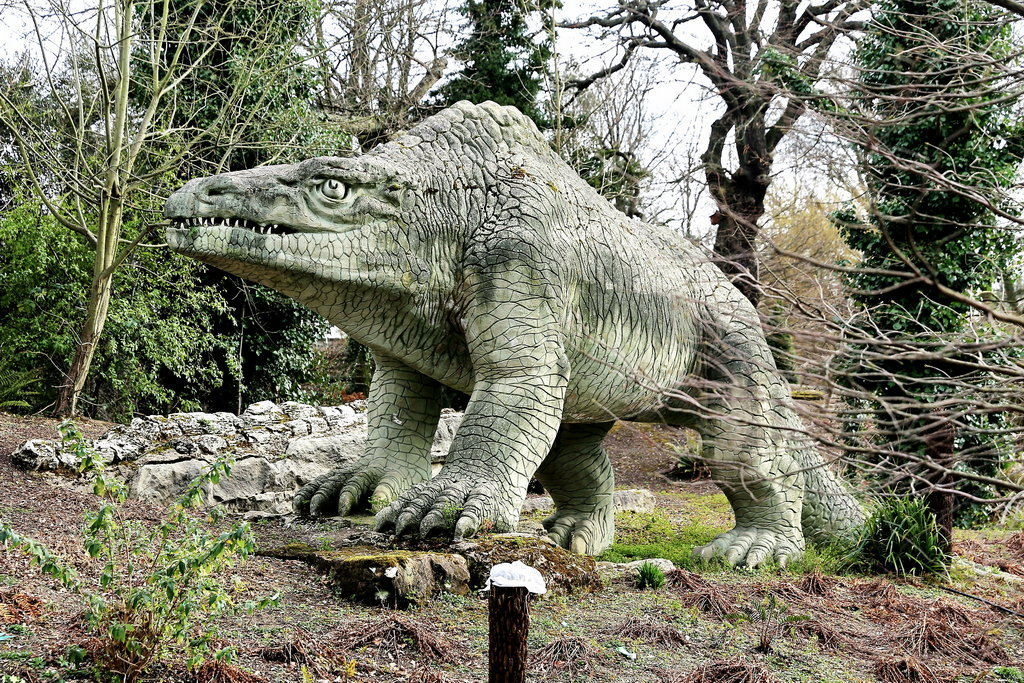
Less than three years before the war broke out, the Crystal Palace burned to the ground. It is still mourned. However, the prehistoric monsters survived (see my photo), the National Sports Centre was built, and my parents took me to the concert bowl for firework music in the early 1970s.
My grandmother was a Larard: the Larards were refugees. Generally remembered as Huguenots – the Calvinists murdered in their tens of thousands by Catherine de Medici in 1572 – they may actually have been Flemish or Walloon refugees from the same period, probably weavers!
Somehow, our family identified Mountsorrel near Loughborough as a place offering suitable employment and religious freedom. Then they moved to Derby where they were involved in the nascent silk industry. From there one son moved to Hull. In 1812, he, Thomas Larard, set up a watchmaking business in a building I photographed when I visited the city, not knowing it had been ‘ours’. Since then, I have managed to buy the sign from the successor shop which was run by the family in the centre of Hull from 1871 to 1975.
Larard shop sign
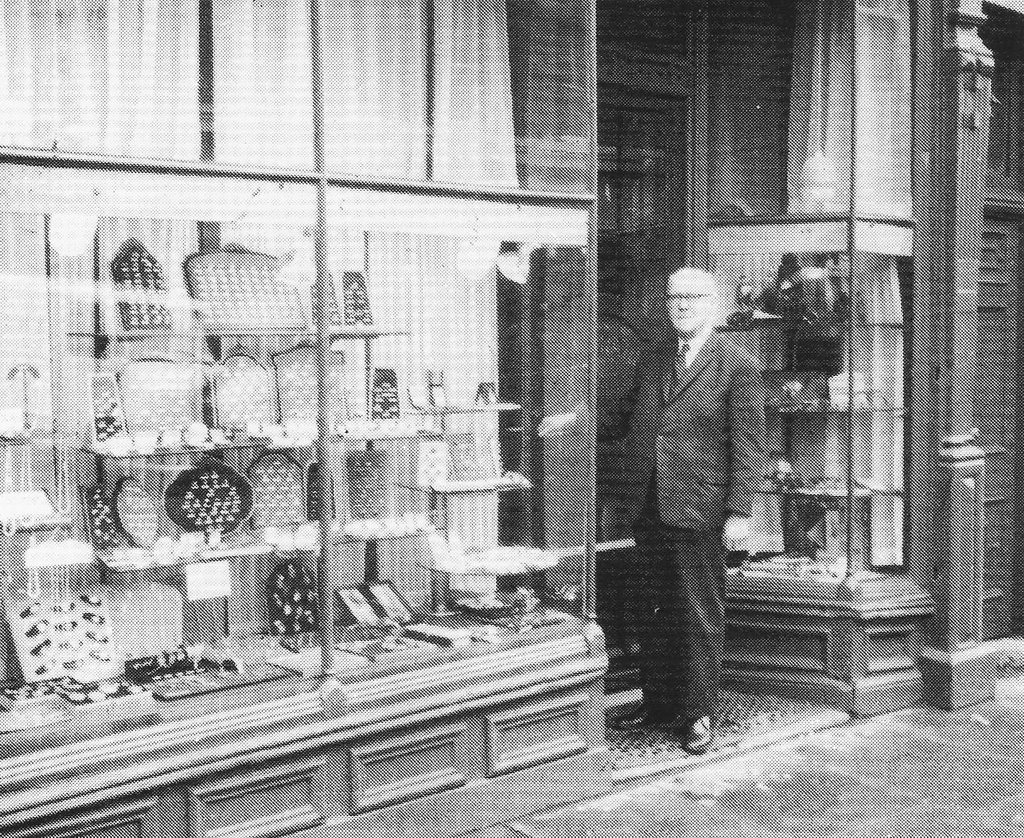
This shop was established by Thomas’s son Frederick. The photos are of Frederick, the two shops, and the sign.
Frederick was a remarkable man who spoke up for the workers and ratepayers of Hull, and was elected mayor in 1904. One of his interests was in improving the local tram system: he visited Hull fair to buy the strongest horses, and Stockton to investigate electric trams. He symbolically laid the first electric tram line in Hull in 1898.
The Larard name has not disappeared from the shopping streets around Hull. In 1896, Frederick’s son founded the Larard estate agency chain, which is still going strong.
Before we move on from Dad’s Dad’s family, a brief reprise of the family’s A-Lister. Captain Matthew Webb was a genuine Victorian hero once he achieved the first swim of the English Channel 125 years ago this week. He was brought up in one of our stomping grounds, in what is now Telford, and he learned to swim in the River Severn. He travelled the world with the Royal Navy before taking up swimming as a career, of sorts. The picture is a scan of his calling card, which I managed to acquire a few years ago. Somewhere in the family, we should still have his Stanhope Gold Medal (presented for attempting to rescue a man overboard from the SS Russia), and an award for his most famous feat. Lots more on the family pages.
I’ve finished the five generations of the tree – it’s quite a book now. For context, I’m looking at the in-laws and following through to living generations, even though I won’t be publishing the latter.
So, I mentioned that one of my gt-grandfather’s sisters married a literary editor (“Faber Book of Ballads” and so on). At the time, I couldn’t find out where he was in 1939. Now I’ve discovered that he was in the Special Operations Executive – but only that he operated roughly in North Africa. After the war, he was a professor of English: his son remembers him remarking once that he’d quite enjoyed his time as a ‘professor of terrorism’.
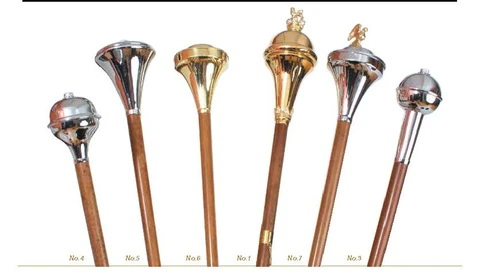
That part of the family also owned a Scottish engineering company whose cranes helped build the Forth bridge. Another of gt-grandad’s sisters also married into an engineering family. One of their companies started out making silver-headed walking sticks, and developed into providing all the batons for the UK military marching bands.
Under the able direction of my third cousin, they have entered into a joint venture with Pearl Percussion and the Royal Marines (!) to supply the drums too! And, apparently, they run the online shop for the Gurkha brigade!
I watched ‘Midway’ with my son last night, a reminder of the sacrifice of 160,000 US servicemen killed in the war against Japan. Up to a million Filipinos died too. But it was not just the naval battle and the atom bomb which persuaded Japan to surrender. A battle-hardened force of a million Soviet soldiers were redeployed from Europe (partly because Stalin was deterred from invading western Europe by the atom bomb), and repelled Japan from Manchuria. The long war of attrition in China had turned against Japan, despite the death of up to 4 million Chinese soldiers; around 20 million civilians also died, from multiple causes, including genocide.
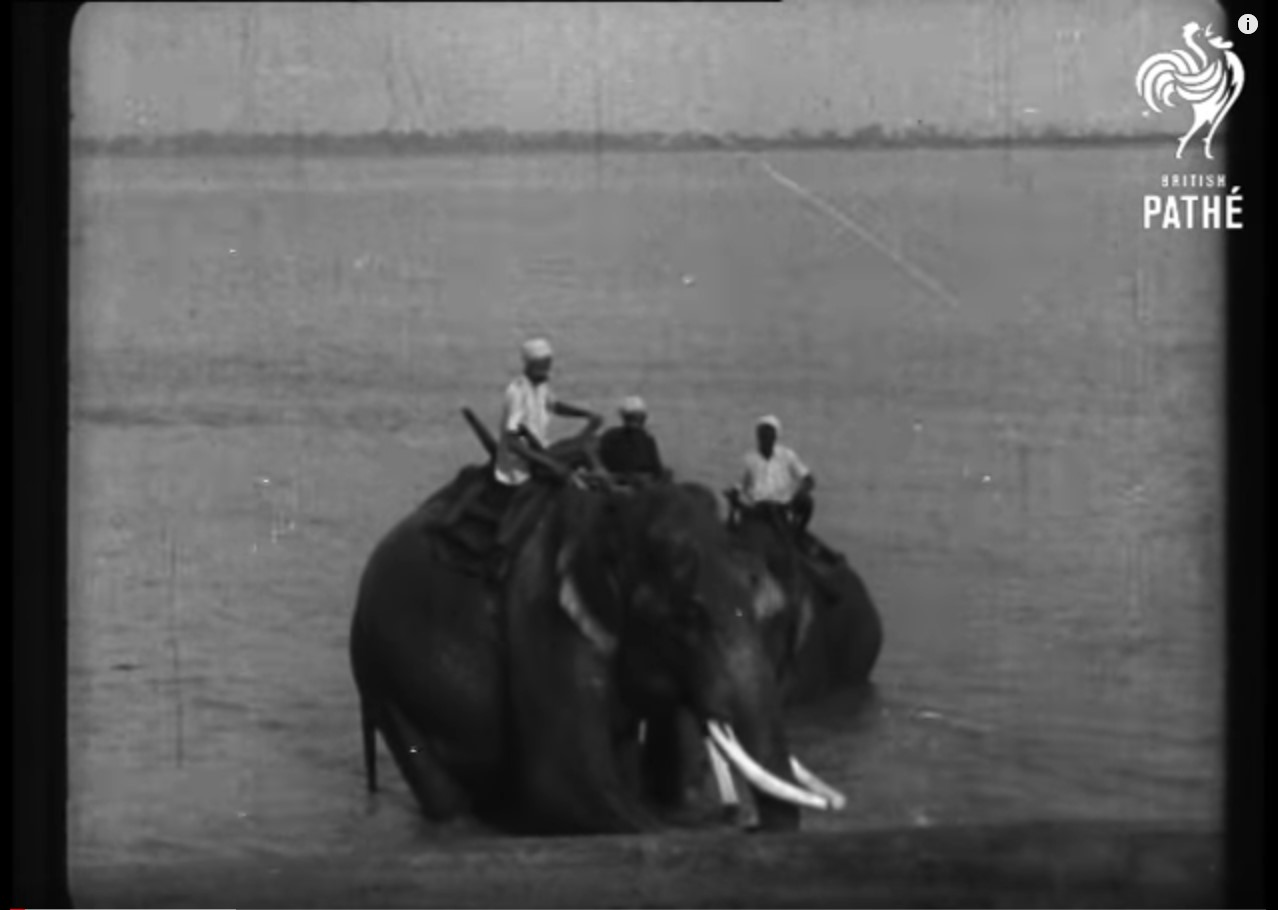
The other front was ‘South East Asia’, which included India, Burma, Malaya, Singapore. The stand-out catastrophe in my family history was the fall of Rangoon on 7 March 1942. The British army narrowly escaped, and burned the city as they left. The retreat was conducted in horrible circumstances. Starving refugees, disorganised stragglers, and the sick and wounded clogged the primitive roads and tracks leading to India. Many civilians had been prevented from leaving earlier.
Shwedagon Pagoda, RangoonRangoon Street View
“It’s a story rarely told, despite being one of the most difficult, desperate mass evacuations in human history. Astonishingly, some 220,000 refugees survived the harrowing journey, of up to 300 miles long; 4,268 are recorded to have died en route, from sickness, exhaustion, malnutrition, starvation or drowning – although the true death toll will never be known.”
The Independent
So when my great-grandparents mentioned it was ‘quite a walk’, you get the idea. I have traced nine families of relatives surviving the evacuation – and two which didn’t make it, and died in POW camps within a few months.
My Anglo-Indian family was military in its origins but I don’t know how many served in WWII, and the records are not yet on general release. I spoke to one elderly Anglo-Indian relative who had joined the RAF in Australia and was posted back to India, and then to Swindon!
My Anglo-Indian grandmother, born in Rangoon, was already in England, having married my English grandfather whom she met at Cambridge University. He served in the Royal Army Medical Corps, and by coincidence or not, was posted to the South East Asia Command, newly formed under Mountbatten in 1943. In 1944, he was given command of the Allied Land Forces biological research section.
(Churchill thought that the fall of Singapore in February 1942 was the great calamity – my other grandmother’s brother managed to escape, tens of thousands were not so lucky.)
On 8 March 1944, the Japanese crossed the Chindwin River into India. But this was the end of their tether. By the end of June, they had suffered the biggest defeat in their history and were pushed back into Burma. Into 1945, the British and Indian ‘Chindit’ insurgents under Stilwell, and the 14th army under Slim, advanced through the length of Burma. Some British heroes had remained behind enemy lines to coordinate resistance.
In 1945, the 14th army was the largest in the world. It was built around the British Indian army, with many units from Britain and from all over the British Empire, augmented by Chinese, Thai and Burmese troops. By the end of April, the Japanese fled Rangoon, amongst similarly horrible scenes to those of three years earlier.
My grandfather’s cousin, a Flying Officer, was killed in 1945 when his Dakota came down in Burma, when carrying troops to garrison Saigon. He and his comrades had performed a vital role in supplying the allies, and had latterly rescued POWs.
Douglas Dakota (my photo)
By V-J Day, soldiers in India and Burma were already the ‘forgotten army’. At one point, my grandfather’s Section surveyed the troops on their attitudes, revealing resentment at wasting their lives, and anger at red tape and ‘bullshit’. My grandfather was mentioned in despatches for gallant and distinguished services in Burma. But this was in 1946, the army once again having generally been forgotten.
I was almost shocked to discover Essex roots! Before I knew this, I happened to be in a pub somewhere near Maldon – very close to these roots – when it emerged that everyone there had been to Barcelona. But they refused to believe that it was the first time I’d visited Essex on purpose! When pressed, they each confessed to never having seen Wiltshire.
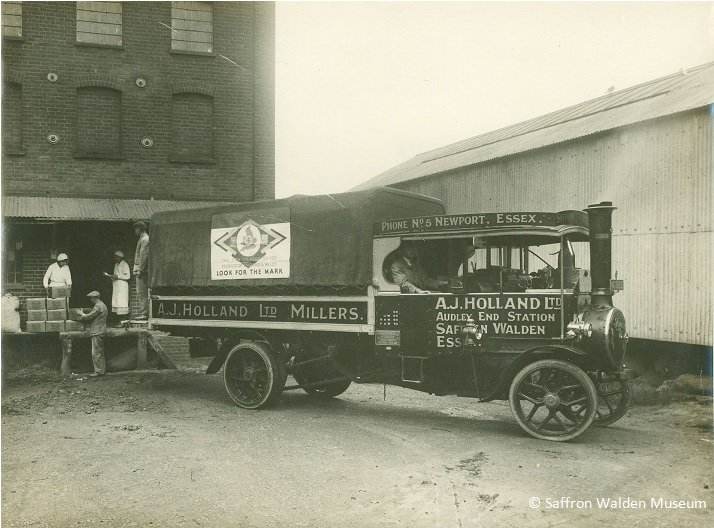
Anyway, I enjoyed Maldon, and looped in a quick visit to see the outside of Audley End. It turns out that the family ran the mill at the edge of that estate, and had a shop at Audley End station.
Audley End (my photo)
It was the Barnard family who built up the fabulous riches mentioned in a previous post. Other than farming and milling (and diamonds), one of their main trades was an artists’ supply business, with a shop on Oxford Street. As well as paints and so on, they supplied early magic lantern slides – all the rage before the advent of cinema! Pictured are a Barnard paint box and a Cinderella slide which I tracked down.
Cinderella (my collection)
Barnard Paint Box (my collection)
There is much more on the family pages, but one line of enquiry I’d like to follow up is around Kathleen Box who was active in Wartime Social Surveys. These allowed the government of the day to understand the views and behaviours of the people.
Kathleen was cousin of the composer Harold, mentioned in an earlier post. Another composer was James Barnard Smart, who amongst other things was also master of a military band, accompanist to Edward Lloyd and Clara Butt, orchestra leader on Brighton West Pier, and private organist to the Duchess of Sutherland!
Brighton West Pier (2014 – my photo)
My photos, except for the museum photo of the megacool steam lorry (pic2) that belonged to the family.
Holland Steam Lorry (Saffron Walden Museum)
The last pic is a Barnard house in Lymington that I photo’d by chance.