Category: Automotive Posts

  • Standard-Triumph (1945-1959)

    Standard-Triumph (1945-1959)

    .

    Triumph 1800 / 2000; Renown Mk1 / Mk2

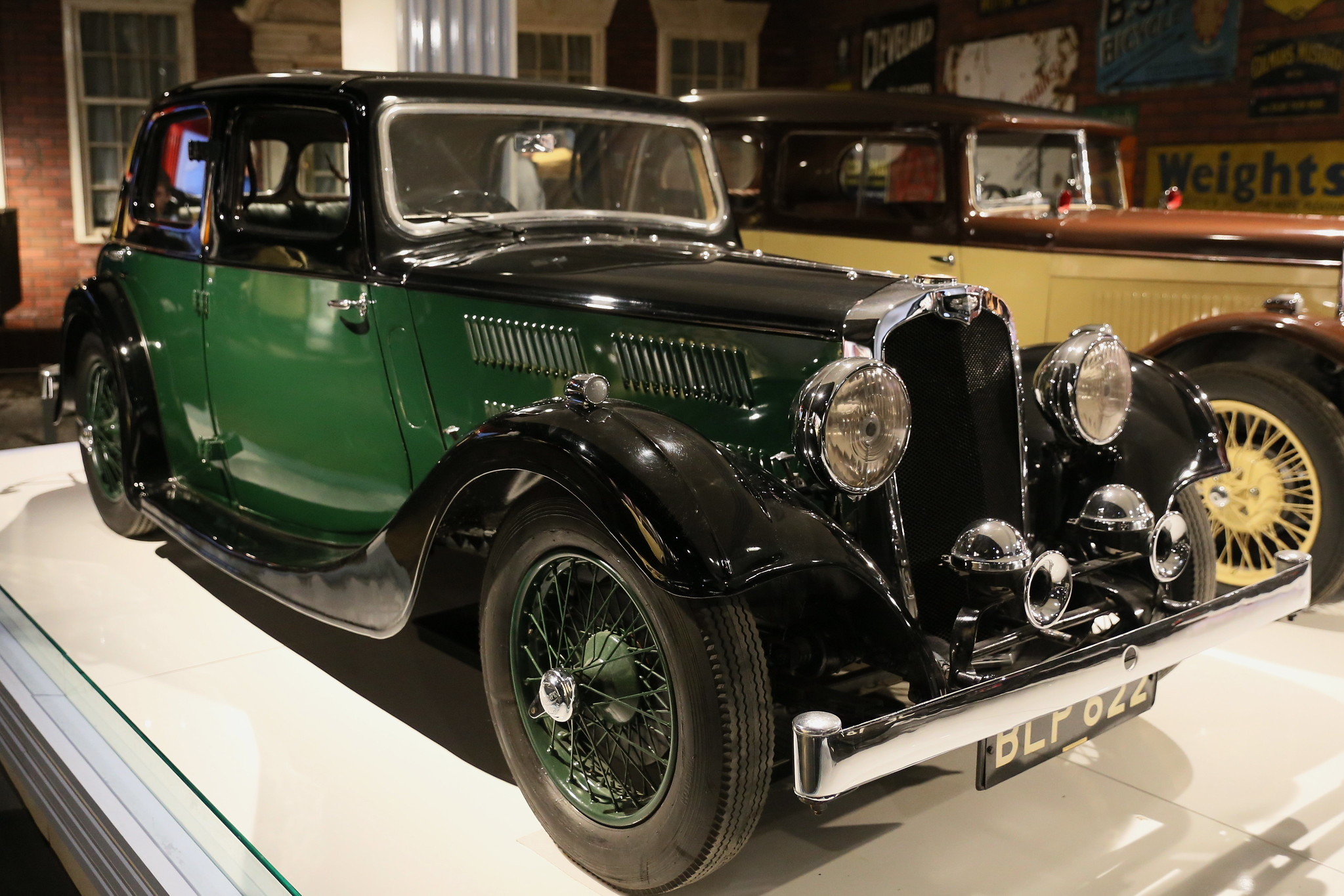
    The first Standard-built Triumph, with razor-edge coachwork by Mulliners of Birmingham, on tubular chassis. 2000 had Vanguard-style chassis. 1.5-litre. A few LWB limousines were made, with sliding division.

    Years

    1946-48 / 1949 ; 1949-52/1952-54

    Engine

    1776cc / 2088cc S4

    Body Style

    Production

    4000 / 2000; 6501 / 2800 + 190 limo

    Power: Weight

    .

    Dimensions

    .

    Exhaust on nearside for 1800.

    Triumph 1800 / 2000 Roadster

    Roadster version. 1800 engine was similar to that provided to Jaguar for their 1.5-litre. Old-school styling, complete with dickey seat

    Years

    1946-48 / 1949

    Engine

    1776cc / 2088cc S4

    Body Style

    Production

    2501/ 2000

    Power: Weight

    .

    Dimensions

    .

    .

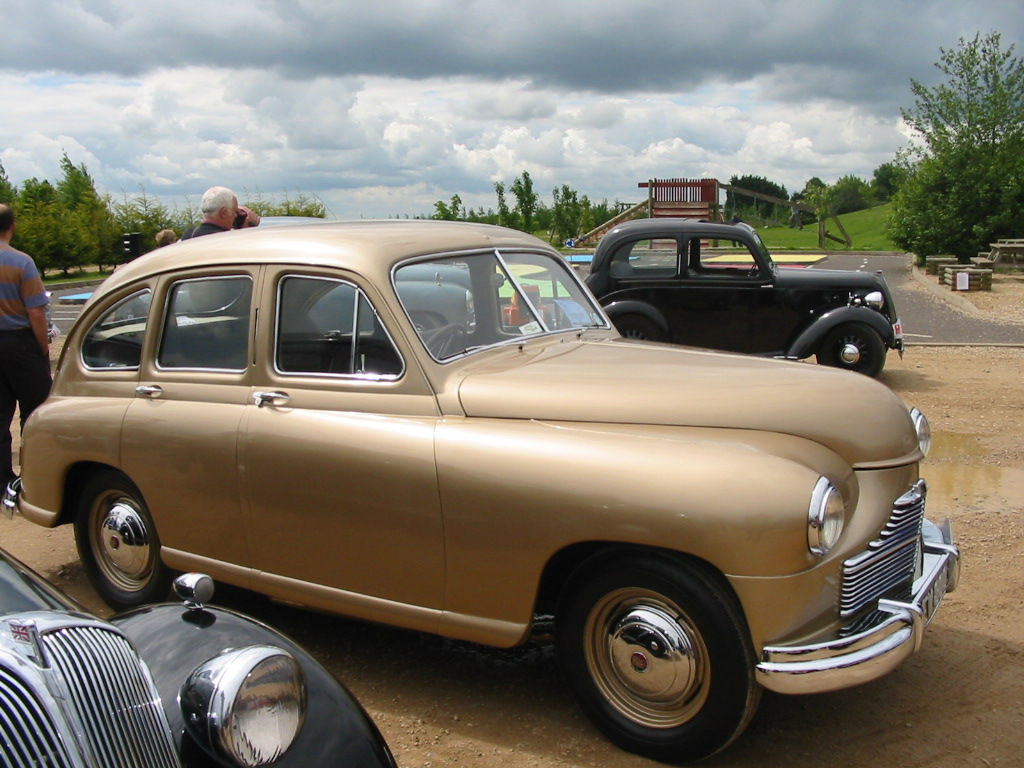
    Standard Vanguard Phase I

    “Tough six-seater hack” with Plymouth-style looks (Walter Belgrove sketched US embassy cars). Wet-liners, hydraulic brakes, coil IFS. Export only, and successful in Australia, Germany etc; eventually assembled in multiple countries.

    Years

    1948-52

    Engine

    2088cc S4

    Body Style

    Sal, est (50-), DH (Bel), ute (Aus), van

    Production

    184,799

    Power: Weight

    .

    Dimensions

    .

    Rear-wheel spats from 1950, lower bonnet line & new grille from 1952

    Triumph Mayflower

    If the Vanguard was selling US styling to the empire, the Mayflower attempted to sell Britishness to America. The company’s first unitary car had proven mechanicals, dodgy handling, and unusual styling – and ended the experiment.

    Years

    1950-53

    Engine

    1247cc S4

    Body Style

    Saloon, a few DHC

    Production

    35,000

    Power: Weight

    .

    Dimensions

    .

    .

    Triumph TR-X

    Belgrove’s futuristic roadster was another experiment for the Triumph brand, complete with aerodynamic, light alloy body, and pop-up headlights. It was Vanguard underneath, with twin-carb version of its engine.

    Years

    1950

    Engine

    2088cc S4

    Body Style

    Roadster

    Production

    3

    Power: Weight

    .

    Dimensions

    .

    Photo: Wikipedia

    Standard Vanguard Phase II

    Same tough package, but with now with notchback styling. Also available as Britain’s first diesel car.

    Years

    1952-55

    Engine

    2088cc S4

    Body Style

    Production

    81,074

    Power: Weight

    .

    Dimensions

    .

    .

    Standard 8

    Rather burned by the Triumph experiments, Standard this time opted for an stripped-down economy car.

    Years

    1953-60

    Engine

    803cc S4

    Body Style

    Production

    136,317

    Power: Weight

    .

    Dimensions

    .

    .

    Triumph TR2

    Successful new generation sportscar, genuinely capable of 100 mph. New chassis and Vanguard-derived engine. Hardtop available from 1954.

    Years

    1953-55

    Engine

    1991cc S4

    Body Style

    Production

    8628

    Power: Weight

    .

    Dimensions

    .

    .

    Standard 10

    Bigger engine and better trim, including plated grille. Phase II from 1957 with plated side trim.

    Years

    1954-60

    Engine

    948cc S4

    Body Style

    Saloon

    Production

    172,500

    Power: Weight

    .

    Dimensions

    .

    .

    Standard (10) Companion

    Roomy estate version with basic trim.

    Years

    1955-61

    Engine

    948cc S4

    Body Style

    Estate car

    Production

    see Standard 10

    Power: Weight

    .

    Dimensions

    .

    .

    Triumph TR3

    Export-focused improvement on the TR2. ‘Occasional’ rear seat. Front disc brakes from 1956.

    Years

    1955-57

    Engine

    1991cc S4

    Body Style

    Production

    13,377

    Power: Weight

    .

    Dimensions

    .

    .

    Standard Vanguard III

    Vanguard is now unitary and has a lower roofline, so lighter, and consequently faster and more economical.

    Years

    1956-58

    Engine

    2088cc S4

    Body Style

    Production

    37,194

    Power: Weight

    .

    Dimensions

    .

    Photo: Wikipedia

    Standard Vanguard Sportsman

    Another experiment with the Triumph brand, as a potential Renown replacement, but ultimately badged a Standard, and didn’t sell well.

    Years

    1956-57

    Engine

    2088cc S4

    Body Style

    Production

    901

    Power: Weight

    .

    Dimensions

    .

    .

    Standard Pennant

    De luxe version of Ten with lengthened wings, two-tone paint, and accompanying chrome.

    Years

    1957-59

    Engine

    948cc S4

    Body Style

    Production

    42,910

    Power: Weight

    .

    Dimensions

    .

    Photo: Wikipedia

    Standard Ensign

    Cheaper trimmed Vanguard with smaller engine.

    Years

    1957-61

    Engine

    1670cc S4

    Body Style

    Saloon

    Production

    18,852

    Power: Weight

    .

    Dimensions

    .

    .

    Triumph TR3A

    Unofficial moniker for the facelifted car with the 100 bhp engine (later also enlarged). Another export-focused car, successful in the USA.

    Years

    1957-61

    Engine

    1991/2138cc S4

    Body Style

    Production

    58,236

    Power: Weight

    .

    Dimensions

    .

    .

    Triumph Vignale Vanguard

    Michelotti’s first modest contribution to the compnay was this face-lifted Vanguard.

    Years

    1958-61

    Engine

    2088cc S4

    Body Style

    Production

    26,276

    Power: Weight

    .

    Dimensions

    .

    .

    Standard Atlas

    The company’s entry into the light van market against competition from Bedford, BMC, Ford and Rootes. Available with 10 or 12 cwt capacity, and as a van (with hinged or sliding doors), or a flatbed.

    Years

    1958-61

    Engine

    948cc S4

    Body Style

    Production

    Power: Weight

    .

    Dimensions

    .

    .

    Triumph Herald

    A new chapter of small cars. See next Chapter!

    Years

    1959-61

    Engine

    948cc S4

    Body Style

    Saloon, coupé, convertible

    Production

    see next Chapter

    Power: Weight

    .

    Dimensions

    .

    .
  • Standard (1903-48)

    Standard (1903-48)

    Standard 6, 10, 12, 15, 16, 24, 50 HP

    Standard set up in a small building in Much Park Street, Coventry, and experimented with small numbers of every size of car. None survive. The company also made engines for other manufacturers.

    Years

    1903-05

    Engine

    S1, 2, 3, 4, 6 1009/1609/1766cc etc

    Body Style

    Production

    Power: Weight

    .

    Dimensions

    .

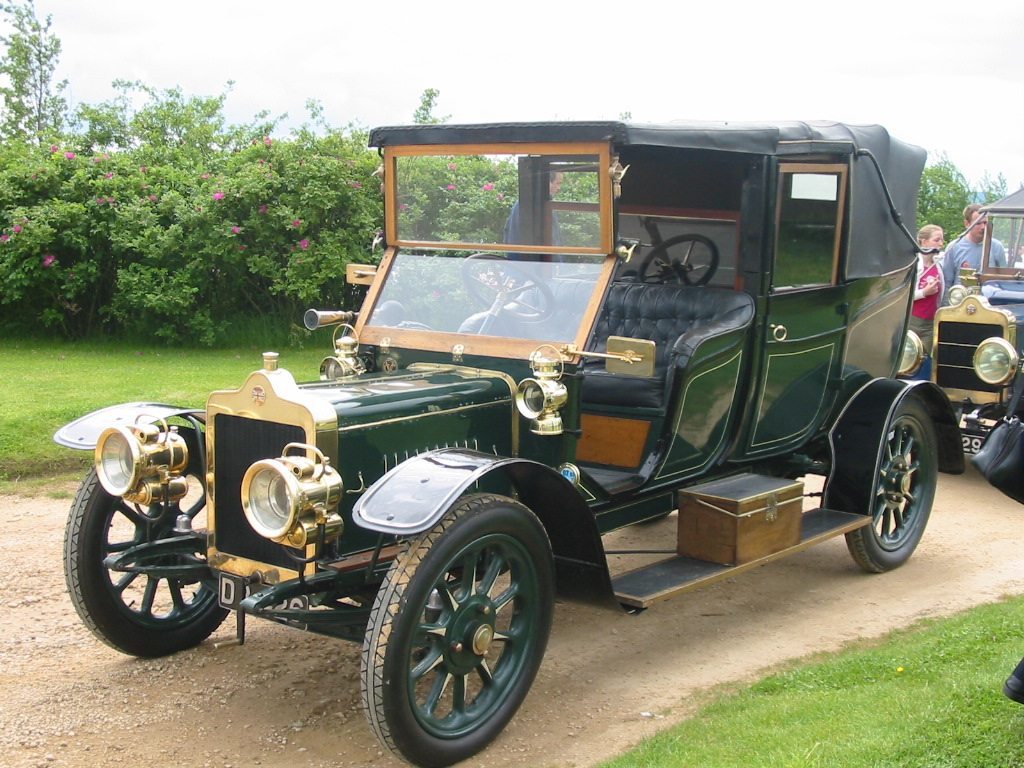
    Standard 20HP, 30HP, 40HP, 70HP

    In 1906, the company moved to larger premises in Cash’s Lane, and initially focused on 6-cylinder models. The oldest surviving car is the Roi de Belges 30HP in Coventry Transport Museum.

    Years

    1906-14

    Engine

    S6 5300/6200/11700cc

    Body Style

    Production

    Power: Weight

    .

    Dimensions

    .

    Model shown is a 30HP cabriolet.

    Standard 8, 11, 12, 15, 16HP

    By 1911, Standard was again offering a full range of cars. The 8 was apparently good value, and popular.

    Years

    1906-11

    Engine

    S4 1087/1656/2368/2688/3531 cc

    Body Style

    Production

    Power: Weight

    .

    Dimensions

    .

    Photographs are few but Alamy has one here

    Standard 9.5 HP

    Standard joined the vogue for volume-produced ‘light’ cars typified by the Morris and Singer 10 HP cars. So, an updated 4-cylinder model was introduced in 1912, with the company focusing on large-car reliability.

    Years

    1913-15; c. 1918 (“S”)

    Engine

    S4 1087cc

    Body Style

    Various 2-seater tourers

    Production

    1933; 198

    Power: Weight

    .

    Dimensions

    .

    Model shown is Rhyl Tourer (1914)

    Standard SLS 9.5 / 11 HP

    An update on the Model S, arguably a stop-gap model (V1-V3) to take advantage of resurgent demand after WWI. The first Standard 8, low-slung with disc wheels was, tried in 1921, but under-developed, perhaps a victim of SLO success.

    Years

    1919-20 / 1922-26

    Engine

    S4 1087cc; 1307cc

    Body Style

    2-seater

    Production

    1750 / 1500

    Power: Weight

    .

    Dimensions

    .

    Picture here on Standard Motor Club site.

    Standard SLO 11 / 14 HP

    Longer wheelbase to create 4-seaters for a core market; OHV engines. By 1924, market share was comparable to Austin, at more than 10,000 cars. Cars still named after British towns. Tourers were actually genuinely weatherproof.

    Years

    1921-28; 1927-30

    Engine

    S4 1009/1609/1766cc OHV(14)

    Body Style

    Saloons; tourers

    Production

    c. 30,000 (15k 14 HP)

    Power: Weight

    .

    Dimensions

    .

    Model shown is 11/14 SLO4 Warwick Saloon (1923). Saloons were new!

    Standard 18/36; 18/42

    The first post-WWI six-cylinder offering using overhead valves like the S4 14, and with a lengthened frame, and servo brakes. Not ideal timing for the launch, and they were sold off in bulk after a reputation for poor relability set in.

    Years

    1926-29

    Engine

    S6 2230cc

    Body Style

    Saloons; tourers

    Production

    .

    Power: Weight

    .

    Dimensions

    .

    .

    Standard Nine / Big Nine

    Quickly designed as a modernisation of the mass-produced 4-cylinder model, although Standard returned to sleeve valves. ‘Worm’ drive apparently inspired by French Mathis designs. Proven by endless drives around the Cotswolds!

    Years

    1928-31

    Engine

    S4 1287cc

    Body Style

    Saloons; Selby tourer.

    Production

    c. 10,000

    Power: Weight

    .

    Dimensions

    .

    Model shown is (steel-bodied) Teignmouth. No grille shoulders from 1930.

    Standard 15 / 16 / 20

    More effective replacement for the 18/36 than the 18/42, and – like the 4-cylinder models, marked a return to sleeve valves. Twenty (from ’31) was longer, and available as a 7-seater or a landaulet, echoeing the Edwardian cars.

    Years

    1928-35

    Engine

    S6 1930cc (15); 2054cc (16); 2552/2663cc (20)

    Body Style

    Saloons; tourers

    Production

    .

    Power: Weight

    .

    Dimensions

    .

    Model shown is a 16 from 1935

    Standard Little Nine / Little 12 / Big 12

    New baby of the range, augmented by a six-cylinder Little 12, and lengthened Big 12 only for 1933.

    Years

    1932-33

    Engine

    S4 1005cc (9); S6 1337cc (12); 1497cc (B12)

    Body Style

    Saloons and tourers.

    Production

    .

    Power: Weight

    .

    Dimensions

    .

    Standard Nine / Ten / 12 / 16

    A new range for ’34 with new frames and new engines. The ten had different. slightly streamlined styling, and was available as a sports saloon and coupe. The 12 was now 4-cylinder but still on a longer wheelbase.

    Years

    1934-36

    Engine

    S4 1052 (9); 1343cc (10); 1608cc (12); S6 2143/2663 (16)

    Body Style

    .

    Production

    .

    Power: Weight

    .

    Dimensions

    .

    .

    Standard Flying 12; 14

    Another new range, this time with more streamlined bodies and backward-leaning grilles. The 12 was the first-launched of the new 4-cylinder models, using the same engine as the outgoing model. 14 from ’37.

    Years

    1936-40 (14 from 1937); 1945-48

    Engine

    S4 1608/1776cc

    Body Style

    1937 Light 12 Tourer shown. Waterfall grille from ’38

    Production

    9959/22,229 post-war

    Power: Weight

    .

    Dimensions

    .

    Standard Flying 16, 20, V-Eight

    The six-cylinder Flying Standards came in various wheelbases, and also reused the engines of the outgoing models. The V-VIII was an exciting answer to Ford (two 10HP blocks and common crankcase) – too exciting on this chassis…

    Years

    1936-40 (V8: 1936-37)

    Engine

    S6, V8

    Body Style

    Saloons; some V8 DHC

    Production

    N/A (c. 350 V8)

    Power: Weight

    .

    Dimensions

    .

    V8 shown. Waterfall grille on V8 and from ’38.

    Photo: Flickr

    Standard Flying 9, 10

    The smallest cars were replaced in 1937. IFS on the 10 from 1939.

    Years

    1937-40

    Engine

    S4 1131cc (9), 1267cc (10)

    Body Style

    .

    Production

    .

    Power: Weight

    .

    Dimensions

    .

    Waterfall grille from ’38

    Photo: Wikipedia

    Standard Flying 8

    A completely new baby Standard. Transverse-leaf IFS, live axle. Long-stroke engine to maximise 8HP capacity.

    Years

    1938-40, 1945-48

    Engine

    S4 1021cc/1009cc pw

    Body Style

    Saloon, tourer

    Production

    53,000 post-war

    Power: Weight

    .

    Dimensions

    .

    No ‘ribbon’ around grille; bonnet louvres post-war

    Standard Flying (Military)

    .

    Years

    1940-41

    Engine

    S4 1021cc (8), 1131cc (9), 1267cc (10)

    Body Style

    Saloon, utility

    Production

    .

    Power: Weight

    .

    Dimensions

    .

    Shown is Flying 12 utility (“tilly”).

    Standard Beaverette

    Lightly armoured car, based on commercial car chassis.

    Years

    1940-42

    Engine

    S4

    Body Style

    Armoured car

    Production

    c. 2800

    Power: Weight

    .

    Dimensions

    .

    .

  • Triumph (1923-39)

    Triumph (1923-39)

    In 1885, Siegfried Bettmann of Nuremberg started importing bicycles from Europe and introduced the Triumph name a year later, and the firm started producing their own bicycles in Coventry, England. In 1902 they began producing motorcycles, and became Britain’s largest manufacturer of motorcycles by the end of WWI. Cars followed in 1923. In 1919, they acquired the Clay Lane premises of the Dawson Car Company and start producing a car there from 1923. Volumes grew through the 1920s, and gradually the focus shifted to higher quality and more sporting models. Along the way, Coventry Climax engines were adopted, and then replaced by in-house designs.

    Triumph Bicycles

    Triumph started as a bicycle dealer manufacturing their own in Coventry and Nuremberg from 1888 and 1896 respectively. The bicycle business was sold to Raleigh in 1932.

    Years

    1888-1932

    Engine

    n/a

    Body Style

    Production

    Power: Weight

    .

    Dimensions

    .

    Model shown is 1921 Triumph Royal

    Triumph Motorcycles

    By 1902, Minerva engines were added; a tricar experiment was made in 1903. By 1907 a larger plant had produced 1,000 machines. WWI was a boost, and “Trusty Triumphs” are seen as th first modern motorycle. The business was sold in 1936.

    Years

    1902-36

    Engine

    1393/1872/2169cc S4

    Body Style

    Tourer, sports saloon, fabric saloon

    Production

    Power: Weight

    .

    Dimensions

    .

    WWI military model shown

    Triumph 10/20, 13/35, 15/50

    Triumph’s first car, largely designed by Lea-Francis, with a Riccardo-designed engine, body initially by Regent Carriage Co; assembled at former Dawson works in Coventry. First British car with all-round hydraulic brakes.

    Years

    1923-30

    Engine

    1393/1872/2169cc S4

    Body Style

    Tourer, sports saloon, fabric saloon

    Production

    c. 2500

    Power: Weight

    .

    Dimensions

    .

    Triumph Super Seven/Eight

    Those responsible for the design and devlopment included Arthur Sykes (ex-Lea-Francis) and Stanley Edge (ex-Austin 7 draughtsman). Rallied by Donald Healey.

    Years

    1927-34

    Engine

    832cc S4

    Body Style

    Tourer, 2-seater, saloon, fabric saloon, coachbuilt saloon

    Production

    c. 17,000

    Power: Weight

    .

    Dimensions

    .

    Photo: Wikipedia

    Triumph Super Seven Sports Special

    For 1929 a new body style was released called the Special Sports with pointed tail and briefly a supercharged version reputedly able to reach 80 mph, as used in the special shown here.

    Years

    1929

    Engine

    747cc S4 supercharged

    Body Style

    Sports racer

    Production

    .

    Power: Weight

    .

    Dimensions

    .

    Triumph Super Nine; Ten

    Coventry Climax engine. 12v electrics. Ten got a rear-wheel handbrake. Southern Cross sports models got longer frame and eventually 1122cc.

    Years

    1931-34

    Engine

    1018cc S4

    Body Style

    4-dr saloon, 2/4-dr tourer, Southern Cross sports

    Production

    c. 9000

    Power: Weight

    .

    Dimensions

    .

    Photo: Wikipedia

    Triumph 12/6 Scorpion

    Six cylinder version, usually on longer wheelbase chassis.

    Years

    1931-33

    Engine

    1203cc S6

    Body Style

    .

    Production

    c. 1500

    Power: Weight

    .

    Dimensions

    .

    Photo: TCdF

    Triumph Dolomite Straight-8

    Donald Healey’s amazing sportscar, closely modelled on the 2.3-litre Alfa, with their encouragement (a tie-up on motorcycles was mooted). Competed in 1935 Monte Carlo rally. A whole range of straight-8 cars were planned, but stillborn.

    Years

    1934

    Engine

    1991cc S8

    Body Style

    .

    Production

    .

    Power: Weight

    .

    Dimensions

    .

    Photo: Wikipedia

    Triumph Gloria 4

    Lower and more handsome than its predecessors, and designed to be special: “quality before everying else”. Skilfully assembled from parts from around Coventry and the west midlands. Vitesse had 1476cc engine.

    Years

    1934-37

    Engine

    1087/1232cc S4

    Body Style

    Saloon, coupé, tourer

    Production

    c. 3000

    Power: Weight

    .

    Dimensions

    .

    Triumph Gloria 6

    Bigger engine and longer bonnet, with an extra set of louvres. Vitesse version was heavily tuned, and the body was lowered and streamlined.

    Years

    1934-37

    Engine

    1476/1991cc S6

    Body Style

    Saloon, coupé, tourer

    Production

    .

    Power: Weight

    .

    Dimensions

    .

    Triumph Gloria Monte Carlo

    Triumph won the light car class of the 1934 Monte Carlo rally, and celebrated with this sporty tourer.

    Years

    1934-37

    Engine

    1232cc S4; 1991cc S6

    Body Style

    .

    Production

    .

    Power: Weight

    .

    Dimensions

    .

    Triumph Gloria Southern Cross

    Proper 2-seater sportscar based on a shortened Monte Carlo.

    Years

    1934-37

    Engine

    12323cc S4; 1991cc S6

    Body Style

    .

    Production

    .

    Power: Weight

    .

    Dimensions

    .

    Triumph (Gloria) Vitesse Free-Flow

    Walter Belgrove’s contribution to the mid-1930s streamlinging fad. A graceful design but one which didn’t sell. The only survivor was for years mounted on a Bentley chassis but has now been reunited with a period Triumph chassis.

    Years

    1935

    Engine

    1476cc S4; 1991 cc S6

    Body Style

    .

    Production

    .

    Power: Weight

    .

    Dimensions

    .

    Triumph Gloria/Vitesse 14; 12

    Made alongside Dolomite, with more traditional styling, and on Gloria chassis, but new OHV engine. Vitesse on longer frame. 12 was the 1939 offering, on the shorter frame, and Jaguar-like grille, styling and price.

    Years

    1937-39

    Engine

    1496/1767 cc S4

    Body Style

    .

    Production

    .

    Power: Weight

    .

    Dimensions

    .

    Triumph Dolomite

    Design overseen by Donald Healey; styling and radiator grille by Walter Belgrove. Wider and roomier. Marketed as “the finest in all the land” luxury sporting saloons. 1.5-litre and roadster on shorter frame – latter with dickey seats.

    Years

    1937-39

    Engine

    1496/1767cc S4; 1991 cc S4/6

    Body Style

    Sports saloon, coupé, roadster

    Production

    .

    Power: Weight

    .

    Dimensions

    .

  • Steam Vehicles

    Steam Vehicles

    The 18th and 19th centuries saw rapid developments in steam power, which launched the industrial revolution, and changed the world. For a few years, steam was a real contender to power road vehicles too.

    Newcomen Steam Engine - Dartmouth

    Newcomen Atmospheric Engine

    Balls spun by jets of steam are ancient; in 1698 Savery sold steam pressure pumps. But Newcomen’s engine produced mechanical work. Gravity pulled up a piston via a beam; vacuum pulled it down as cold water condensed steam.

    Years

    1712-68

    Engine

    Steam

    Body Style

    Stationary Pumping Engine

    Production

    Power: Weight

    .

    Dimensions

    .

    This one worked from c. 1760 to 1913 in Coventry – now a memorial in Dartmouth

    Tower Bridge Steam Engine

    Horizontal Steam Engine

    Pickard in 1780 patented a crankshaft and flywheel, but for his updated design with separate condensor, Watt circumvented this with his ‘sun and planet‘ patent. Eventually, improving engineering led to horizontal engines.

    Years

    .

    Engine

    Steam

    Body Style

    Stationary engine

    Production

    Power: Weight

    .

    Dimensions

    .

    Photo: Wikipedia

    This example is from Tower Bridge

    Cugnot Steam Wagon

    Cugnot Steam Wagon

    Cugnot’s steam dray, the world’s first motor vehicle, weighed 2.5 t tare, and 2.8 t gross. The front wheel supported a steam boiler and driving mechanism. It could carry 4 passengers at walking pace.

    Years

    1770

    Engine

    Steam

    Body Style

    Dray

    Production

    1

    Power: Weight

    .

    Dimensions

    .

    Trevithick London Steam Carriage

    Trevithick London Steam Carriage

    Assembled in London at the works of William Felton, a horse carriage builder. A coal-burning Trevithick steam engine was fitted to the rear to replace the horse. Trevithick managed to drive 8 people from Leather Lane, Holborn to Paddington. And bring them back the same day!

    Years

    1803

    Engine

    Steam

    Body Style

    Horseless Carriage

    Production

    1

    Power: Weight

    2 tonnes

    Dimensions

    .

    Photo: Credit

    Shown is Tom Brogden’s 1998 replica

    Catch Me Who Can

    Catch Me Who Can

    An evolution of three earlier locomotives by inventor and mining engineer Richard Trevithick. The first locomotive in the world to haul fare-paying passengers – at a steam circus in London.

    Years

    1808

    Engine

    Steam

    Body Style

    Locomotive

    Production

    1

    Power: Weight

    .

    Dimensions

    .

    Photo: Wikipedia

    Stephensons Rocket (1829)

    ‘Rocket’

    Robert Stephenson’s clear winner in the locomotive trials for the Liverpool & Manchester Railway. A substantial advance over previous designs, with multi-tube boiler and the blast-pipe.

    Years

    1829

    Engine

    Steam

    Body Style

    Locomotive

    Production

    1

    Power: Weight

    .

    Dimensions

    .

    Walter Hancock’s ‘Enterprise’ Steam Carriage

    Walter Hancock’s ‘Enterprise’ Steam Carriage

    Built in London, body similar to the Shillabeer horse-drawn Omnibus with passengers sitting facing each other. Started running in 1833, carrying fare paying passengers in London and beyond. Artillery wheels, leaf springs, driven rear axle, steering wheel!

    Years

    1830

    Engine

    Steam

    Body Style

    Horseless Carriage

    Production

    1

    Power: Weight

    3.2 tonnes

    Dimensions

    .

    Photo: Credit

    Shown is Tom Brogden’s replica

    SS Great Britain

    SS Great Britain

    The first iron steamer to cross the Atlantic Ocean, and the largest passenger ship in the world. Designed by Isambard Kingdom Brunel for the Great Western Steamship Company’s service between Bristol and New York City.

    Years

    1845

    Engine

    Steam

    Body Style

    Ocean liner

    Production

    1

    Power: Weight

    .

    Dimensions

    .

    Grenville Steam Carriage (1875)

    Grenville Steam Carriage

    Developed by Robert Neville-Grenville and George Jackson Churchward, built around a boiler from a Merryweather fire engine, it could carry 7 people including the driver, steersman and stoker.

    Years

    1875

    Engine

    .

    Body Style

    .

    Production

    .

    Power: Weight

    .

    Dimensions

    .

    Turbinia

    Turbinia

    The first steam turbine-powered steamship – easily the fastest ship in the world at its launch. Demonstrated dramatically at the Spithead Navy Review in 1897 and set the standard for the next generation of steamships.

    Years

    1894

    Engine

    Steam

    Body Style

    Steamship

    Production

    1

    Power: Weight

    .

    Dimensions

    .

    Photo: WIkipedia

    Marshall 8nHP Alderman (1897)

    Marshall 8nHP Alderman

    Marshall’s produced large numbers of steam traction engines, steam rollers, portable engines and agricultural machinery of all types.

    Years

    1897

    Engine

    Steam

    Body Style

    Traction Engine

    Production

    .

    Power: Weight

    Dimensions

    .

    Soame Steam Cart (1897)

    Soame Steam Cart

    Built at the Perseverance Works of Samuel Soame (1837-1918) in the North Norfolk village of Marsham.

    Years

    1897

    Engine

    Steam

    Body Style

    Steam Cart

    Production

    .

    Power: Weight

    .

    Dimensions

    .

    LIFU Steam Car (1901)

    LIFU Steam Car

    Built by the Liquid Fuel Engineering Co of East Cowes, Isle of Wight, who made a variety of steam boats and road vehicles from 1893.

    Years

    1901

    Engine

    Steam

    Body Style

    Open car

    Production

    Power: Weight

    Dimensions.

    GWR 3700 City of Truro (1903)

    GWR 3700 City of Truro

    A 4-4-0 steam locomotive built at Swindon Works to a design by George Jackson Churchward. The first locomotive to reach 100 mph.

    Years

    1903

    Engine

    Steam

    Body Style

    Locomotive

    Production

    .

    Power: Weight

    .

    Dimensions

    .

    Turner-Miesse Steam Car (1904)

    Turner-Miesse Steam Car

    Built by Turner in Wolverhampton under licence from the Brussels-based company of J. Miesse.

    Years

    1904

    Engine

    Steam

    Body Style

    Car

    Production

    Power: Weight

    Dimensions

    Stanley Steamer (1910)

    Stanley Steamer

    Stanley (of Massachussetts) built cars with twin front-mounted cylinders of simple-expansion type geared directly to the rear axle, differentiating them from earlier rear-boilered cars.

    Years

    1910

    Engine

    Steam

    Body Style

    Car

    Production

    670 (in 1910)

    Power: Weight

    Dimensions

    Burrell 5nHP The Busy Bee (1910)

    Burrell 5nHP The Busy Bee

    Charles Burrell & Sons were builders of custom steam traction engines, agricultural machinery, steam lorries and steam tram engines, and the biggest employer in Thetford, Norfolk.

    Years

    1910

    Engine

    Steam

    Body Style

    Showmans Tractor

    Production

    670 (in 1910)

    Power: Weight

    Dimensions

    Foden Steam Wagon (1921)

    Foden Steam Wagon

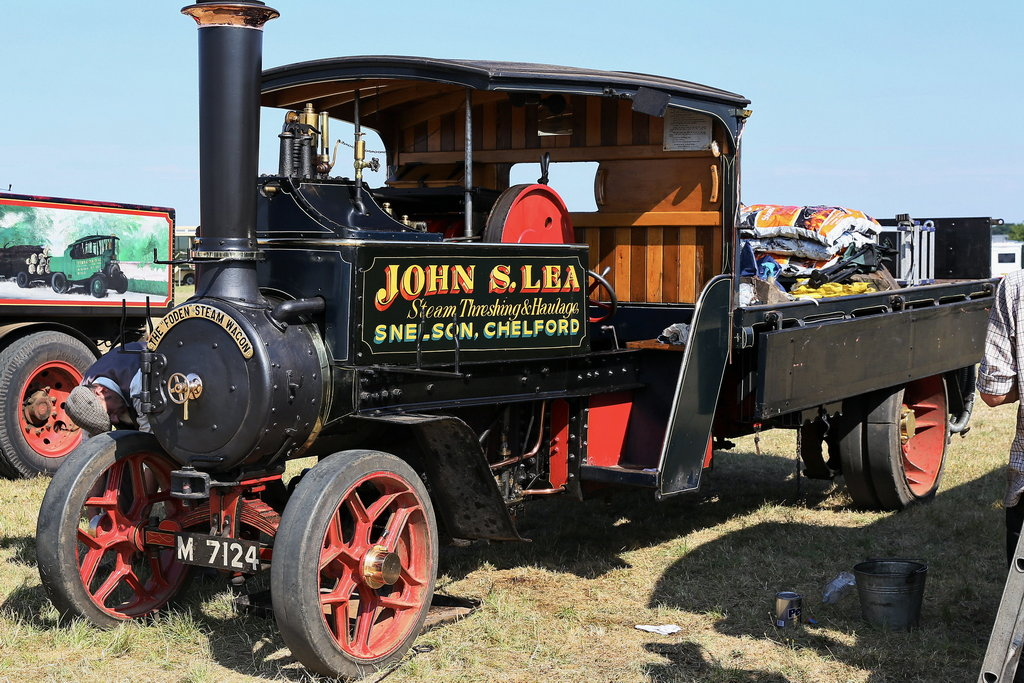
    As legislation allowed Foden produced traction engines from 1878, and lorries from 1896, and then military vehicles from 1901. Foden went diesel in the early 1930s, acquired by Paccar in 1980 and the brand was retired in 2006.

    Years

    1921

    Engine

    Steam

    Body Style

    Steam Wagon

    Production

    Power: Weight

    Dimensions

    Stanley Steamer (1921)

    Stanley Steamer

    These later models had aluminium coachwork resembling those of contemporary petrol cars (which provided increasingly difficult competition), but they retained steam-car features by having no transmission, clutch, or driveshaft. They also had a fully sprung tubular steel frame.

    Years

    1921

    Engine

    Steam

    Body Style

    Saloon Car

    Production

    Power: Weight

    Dimensions

    Mann Steam Cart (1925)

    Mann Steam Cart

    Mann made some of the earliest steam carts from about 1898, and had successful ranges of 3 and 5 ton trucks. Eventually taken over by Atkinson, and sold to Scammell.

    Years

    1925

    Engine

    Steam

    Body Style

    Steam Cart

    Production

    Power: Weight

    Dimensions

    GWR 6000 King George V (1927)

    GWR 6000 King George V

    4-6-0 locomotive; the largest class built by the GWR. Handled the principal GWR expresses on the main line from London to the West of England and on the Chiltern line to Birmingham and Wolverhampton, until 1962.

    Years

    1927

    Engine

    Steam

    Body Style

    Locomotive

    Production

    .

    Power: Weight

    .

    Dimensions

    .

    Sentinel Steam Bus (1931)

    Sentinel Steam Bus

    Sentinel made steam road vehicles from 1905. From 1923, they were assembled in a radical new plant at Shrewsbury, which made 1550 vehicles on a flow line based on the Ford Model T factory in Michigan.

    Years

    1931

    Engine

    Steam

    Body Style

    Bus

    Production

    .

    Power: Weight

    .

    Dimensions

    .

    Sentinel S6 Steam Truck (1934)

    Sentinel S6 Steam Truck

    A new and advanced steamer, with a single-acting four-cylinder underfloor engine with longitudinal crankshaft and an overhead worm-drive axle. They became the biggest ever selling steam lorry. Undone by legislation on weight.

    Years

    1934

    Engine

    Steam

    Body Style

    Locomotive

    Production

    .

    Power: Weight

    .

    Dimensions

    .

    LNER Class A4 4468 Mallard (1938)

    LNER Class A4 4468 Mallard

    A streamlined 4-6-2 (“Pacific”) built at Doncaster Works to a design of Nigel Gresley. Has held the world speed record for steam locomotives at 126 mph since 1938.

    Years

    1938

    Engine

    Steam

    Body Style

    Locomotive

    Production

    .

    Power: Weight

    168 tonnes

    Dimensions

    .

    Photo: WIkipedia

  • Fire Engines (pre-1900-1959)

    Fire Engines (pre-1900-1959)

    Manual Fire Engine

    From Stoke Bruerne Canal Museum

    Years

    Engine

    .

    Body Style

    .

    Production

    .

    Power: Weight

    .

    Dimensions

    .

    Waterwitch Horse-Drawn Fire Engine

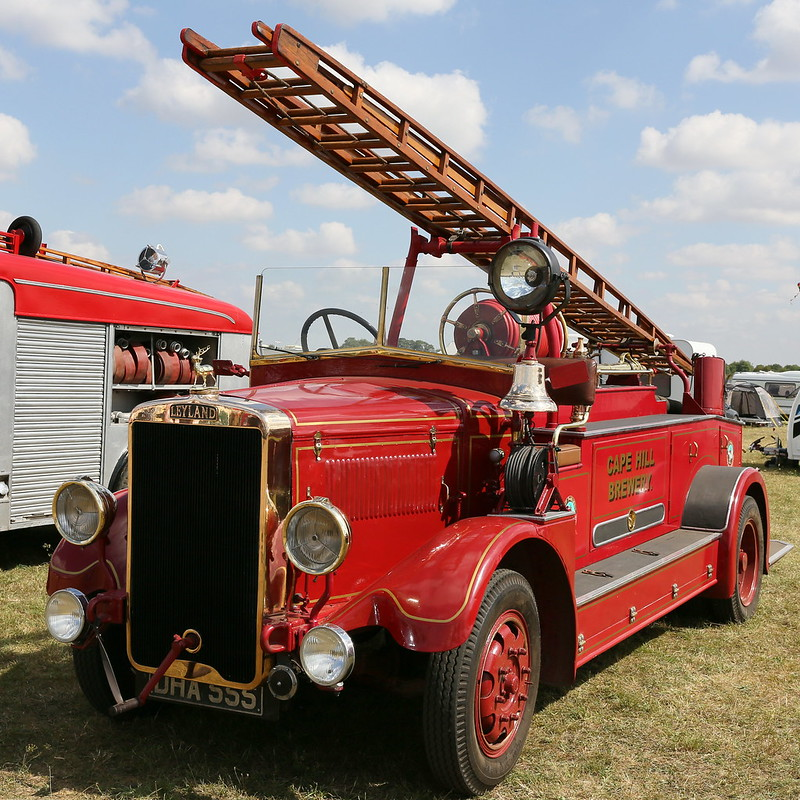
    Built for Henry Mitchell & Co for the Cape Hill Brewery.

    Years

    1879

    Engine

    .

    Body Style

    .

    Production

    .

    Power: Weight

    .

    Dimensions

    .

    Merryweather horse-drawn fire engine

    Ex-LNER, Gateshead

    Years

    1880

    Engine

    .

    Body Style

    .

    Production

    .

    Power: Weight

    .

    Dimensions

    .

    Merryweather Motorised Fire Engine

    Britain’s first motorised fire engine

    Years

    1904

    Engine

    .

    Body Style

    .

    Production

    .

    Power: Weight

    .

    Dimensions

    .

    Gobron-Brillie Fire Engine

    .

    Years

    1907

    Engine

    .

    Body Style

    .

    Production

    .

    Power: Weight

    .

    Dimensions

    .

    Merryweather Fire Engine

    Brazil

    Years

    1912

    Engine

    .

    Body Style

    .

    Production

    .

    Power: Weight

    .

    Dimensions

    .

    Photo: Wikipedia

    Dennis Fire Engine

    Swindon railway works

    Years

    1912

    Engine

    .

    Body Style

    .

    Production

    .

    Power: Weight

    .

    Dimensions

    .

    Leyland Merryweather Fire Engine

    Holkham Hall

    Years

    1915

    Engine

    .

    Body Style

    .

    Production

    .

    Power: Weight

    .

    Dimensions

    .

    Gwynnes Fire Engine

    Holkham Hall

    Years

    c. 1922

    Engine

    .

    Body Style

    .

    Production

    .

    Power: Weight

    .

    Dimensions

    .

    Ford Model T Fire Engine

    .

    Years

    1923

    Engine

    .

    Body Style

    .

    Production

    .

    Power: Weight

    .

    Dimensions

    .

    Guy-Morris Fire Engine

    .

    Years

    1924

    Engine

    .

    Body Style

    .

    Production

    .

    Power: Weight

    .

    Dimensions

    .

    Morris Fire Engine

    Years

    1929

    Engine

    .

    Body Style

    .

    Production

    .

    Power: Weight

    .

    Dimensions

    .

    Morris C-Type Fire Engine

    Years

    1934

    Engine

    .

    Body Style

    .

    Production

    .

    Power: Weight

    .

    Dimensions

    .

    Leyland Fire Engine

    .

    Years

    1937

    Engine

    .

    Body Style

    .

    Production

    .

    Power: Weight

    .

    Dimensions

    .

    Merryweather Fire Engine

    Britain’s earliest surviving airfield crash tender

    Years

    1937

    Engine

    .

    Body Style

    .

    Production

    .

    Power: Weight

    .

    Dimensions

    .

    Photo: Flickr

    Dennis Ace Fire Engine

    .

    Years

    1937

    Engine

    .

    Body Style

    .

    Production

    .

    Power: Weight

    .

    Dimensions

    .

    Leyland-Metz Fire Engine

    .

    Years

    c. 1938

    Engine

    .

    Body Style

    .

    Production

    .

    Power: Weight

    .

    Dimensions

    .

    Austin K2 Fire Engine

    Served with Coventry Fire Service during the blitz, then Jaguar works.

    Years

    1939

    Engine

    .

    Body Style

    .

    Production

    .

    Power: Weight

    .

    Dimensions

    .

    Leyland Fire Engine

    .

    Years

    1940

    Engine

    .

    Body Style

    .

    Production

    .

    Power: Weight

    .

    Dimensions

    .

    Karrier Fire Engine

    .

    Years

    1952

    Engine

    .

    Body Style

    .

    Production

    .

    Power: Weight

    .

    Dimensions

    .

    Dennis F8 Fire Engine

    .

    Years

    1953

    Engine

    .

    Body Style

    .

    Production

    .

    Power: Weight

    .

    Dimensions

    .

    Land Rover Fire Engine and Coventry Climax FW Godiva Fire Pump

    The famous Coventry Climax engine adapted for racing car use by Lotus, Cooper and others.

    Years

    1953

    Engine

    .

    Body Style

    .

    Production

    .

    Power: Weight

    .

    Dimensions

    .

    Bedford Green Goddess Fire Engine

    .

    Years

    1956

    Engine

    .

    Body Style

    .

    Production

    .

    Power: Weight

    .

    Dimensions

    .

    Alvis Salamander Pyrene Fire Crash Tender

    Shares the six-wheel-drive chassis with the FV 601 Saladin armoured car. Firefighting equipment by The Pyrene Company Limited could produce 7,500 gallons of foam per minute and carried a crew of 6.

    Years

    1958

    Engine

    6515cc S8 Rolls-Royce B81

    Body Style

    .

    Production

    .

    Power: Weight

    .

    Dimensions

    .

  • AC (1903-1939)

    AC (1903-1939)

    The Weller brothers of West Norwood showed their first car at the 1903 Crystal Palace Motor Show, but their financial backer preferred small delivery vehicles. Success led them first back to conventional cars, and then to investment from S. F. Edge. However, falling sales meant that the company was caught by the crash of 1929. Its new buyers did not originally intend to make new cars but eventually struck a deal with Standard to supply the chassis necessary to see production through the 1930s.

    AC Sociable

    AC Sociable

    AC (Auto Carrier) started making 3-wheeled delivery vehicles in 1904; the Sociable was the passenger car.

    Years

    1907-1914

    Engine

    631cc S2

    Body Style

    .

    Production

    1800

    Power: Weight

    .

    Dimensions

    .

    Photo: Bonhams

    AC 10 HP

    c / 12 HP (12/24)

    4-wheel light car production started just before the war. Several thousand were sold in the 1920s, in an old balloon factory in Thames Ditton.

    Years

    1913-20; 1920-28

    Engine

    1319/1496cc S4

    Body Style

    .

    Production

    Power: Weight

    .

    Dimensions

    .

    Photo: Bonhams

    AC Six

    AC Six (16/56, 16/66, 16/70)

    The six range included Aceca DHC, and a Six was the first British car to win the Monte Carlo rally in 1926. New models came in 1933 after a brief hiatus.

    Years

    1921-39

    Engine

    1478/1922cc S6

    Body Style

    2- and 4-door saloons and coupés/DHC;

    Production

    587

    Power: Weight

    .

    Dimensions

    .

    Photo: Wikipedia

    AC 16/70 March special

    AC Six (16/70)

    S. F. Edge of Napier fame bought into AC in 1921, and started promoting AC through competition, notably at Brooklands. This continued through the 1930s (car shown is a 16/70 March special).

    Years

    1921-39

    Engine

    1922cc S6

    Body Style

    2- and 4-door saloons and coupés/DHC;

    Production

    587

    Power: Weight

    .

    Dimensions

    .

    Photo: Wikipedia

    AC Royal Saloon

    AC Six (16/80, 16/90)

    .

    Years

    1936-39

    Engine

    1478/1922cc S6

    Body Style

    .

    Production

    44

    Power: Weight

    .

    Dimensions

    .

  • Bentley (1919-31)

    Bentley (1919-31)

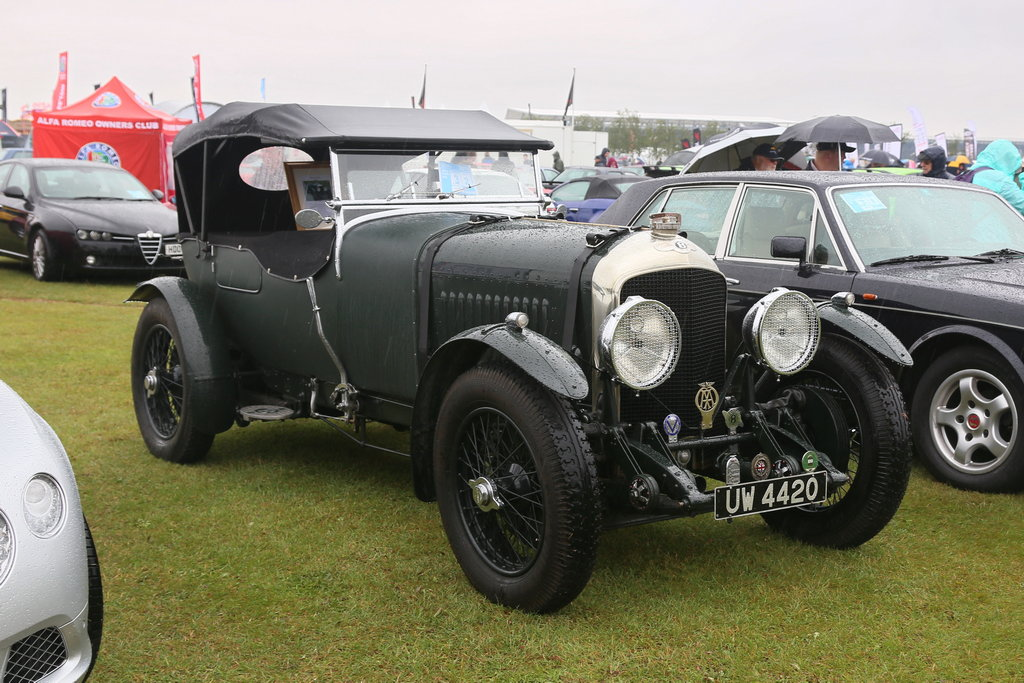
    W. O. Bentley set up in Cricklewood to sell French DFP cars, and then began experimenting with aluminium pistons in car and aero engines. In 1919-20 he built prototype cars, which went into production in 1921. The 3-litre engine had the advanced overhead camshaft, dry sump, 4-valve per cylinder, twin spark, twin carb engine designed by Clive Gallup (partly inspired by 1914 GP Mercedes confiscated by the war office at Bentley’s suggestion and dismantled at Rolls Royce! But with more aluminium.) In 1924, Bentley won Le Mans! This inspired Woolf Barnato to invest, and the other “Bentley boys” also to adopt the cars. Bentley won Le Mans 4 years in successon from 1927-30. But Barnato was unable to stop the company going into liquidation in 1930.

    Bentley 3-Litre TT

    The TT model, named as a ‘replica’ of the 1922 Isle of Man TT cars, later evolved into the Speed Model. The car shown is on the chassis of a 1921 car raced at Brooklands.

    Years

    .

    Engine

    2996cc S4

    Body Style

    Tourer, saloon, limousine

    Production

    .

    Power: Weight

    .

    Dimensions

    .

    Bentley 3-Litre Speed Model

    Blue badge for the chassis for formal bodies (often by near neighbours Vanden Plas), red for the Speed Model and rare green badge for Super Sports 100 mph cars. Won Le Mans in 1924 and 1927.

    Years

    1921-29

    Engine

    2996cc S4

    Body Style

    Various sports, tourer, saloon

    Production

    1088+513+18

    Power: Weight

    .

    Dimensions

    .

    Bentley 3-Litre Blower

    In the winter of 1926/7 the factory’s service department created the first supercharged Bentley when this car had a Roots type blower fitted (2 years ahead of the Birkin supercharged cars).

    Years

    1927

    Engine

    2996cc S4

    Body Style

    .

    Production

    1

    Power: Weight

    .

    Dimensions

    .

    Bentley 4.5-Litre

    Uprated chassis to cope with bigger and heavier 4-cylinder version of the new engine. Won Le Mans in 1928.

    Years

    1927-31

    Engine

    4398cc S4 OHC

    Body Style

    Various tourers and saloons

    Production

    665

    Power: Weight

    .

    Dimensions

    .

    Bentley 4.5-litre ‘Le Mans’

    Vanden-Plas-built Le Mans replica on shorter chassis. Many other 4.5-litre cars have subsequently also been shortened. This one was rebodied in the 1950s and fitted with a supercharged engine.

    Years

    c. 1928-31.

    Engine

    4398cc S4 OHC

    Body Style

    .

    Production

    see 4.5-Litre

    Power: Weight

    .

    Dimensions

    .

    Bentley 4.5-Litre Supersport Special

    Example of coachbuilt ‘special’ sportscar. This was was rebodied since the 1960s (which is not uncommon).

    Years

    1925

    Engine

    4398cc S4 OHC

    Body Style

    .

    Production

    see 4.5-Litre

    Power: Weight

    .

    Dimensions

    .

    Bentley 4.5-Litre Supercharged

    Against W. O. Bentley’s wishes (hence the external mounting of the supercharger), driver Tim Birkin organised Villiers superchargers to be fitted for Le Mans homologation (like Mercedes).

    Years

    1930-31

    Engine

    4398cc S4 OHC

    Body Style

    .

    Production

    55

    Power: Weight

    .

    Dimensions

    .

    Bentley 6.5-Litre Saloon

    Luxury rival to Rolls-Royce with the 6-cylinder version of the new engine. Short- or long-wheelbase.

    Years

    1926-30

    Engine

    6597cc S6 OHC

    Body Style

    Various saloons

    Production

    545

    Power: Weight

    .

    Dimensions

    .

    Bentley 6.5-Litre Tourer

    Open version (by coachbuilders)

    Years

    1926-30

    Engine

    6597cc S6 OHC

    Body Style

    Various tourers

    Production

    See saloon

    Power: Weight

    .

    Dimensions

    .

    Bentley Speed Six

    Mid-length chassis, high-compression engine, twin carbs. Won Le Mans in 1929 and 1930.

    Years

    1929-30

    Engine

    6597cc S6 OHC

    Body Style

    Various open and closed sports coupés

    Production

    182

    Power: Weight

    .

    Dimensions

    .

    Non-tapering radiator sides vs 6.5-Litre standard. Green badge.

    Bentley 8-Litre

    A real competitor to Rolls-Royce, who probably bought Bentley from administration to prevent the car being perpetuated by Napier or another company. 12′ or 13′ wheelbase. Lightweight elektron casting!

    Years

    1931

    Engine

    7928cc S6 OHC

    Body Style

    Various tourers and saloons

    Production

    100

    Power: Weight

    .

    Dimensions

    .

  • Lagonda (1913-46)

    Lagonda (1913-46)

    Lagonda was founded in Staines by American former opera singer, Wilbur Gunn, who died in 1920. They made about 700 cars a year in the early 1920s, falling to about 200 later in the decade. They made almost everything, including nuts and bolts, in house. The company went bust in 1935, and was bought from the receiver by Alan Good, who employed W. O. Bentley to revitalise the company. Lagonda expanded for war production, but had little to keep them going afterwards, and no steel ration for cars. David Brown was the saviour, who purchased the company and combined it with Aston Martin.

    Lagonda 11 hp

    An advanced small car, with panhard rod suspension and a rivetted unibody. Apparently, had the world’s first fly-off handbrake. Early 11.1 versions replaced by 11.9 1421cc in 1920 and 12/24 in 1923.

    Years

    1913-23 (12: 1923-26)

    Engine

    1099cc S4

    Body Style

    Convertible coupé

    Production

    c. 6000

    Power: Weight

    .

    Dimensions

    .

    Photo: Bonhams

    Lagonda 14/60 2-Litre Speed Model

    Represents a move towards more sporting and more luxury motoring. 16/65 available from 1926. Lagonda made their own bodies.

    Years

    1925-31 (16: 1926-30)

    Engine

    1954cc S4

    Body Style

    Tourer, saloon, fabric saloon

    Production

    1440 + c. 250 16/65

    Power: Weight

    .

    Dimensions

    .

    Lagonda 3-Litre

    New 6-cylinder engine, enlarged from 1933 when the 2-litre replacement, the 16/80 was launched (with a Crossley-based engine).

    Years

    1929-34

    Engine

    2931/3181cc S6

    Body Style

    Tourer, saloon, limousine

    Production

    c. 570

    Power: Weight

    .

    Dimensions

    .

    Lagonda 16/80

    2-Litre replacement

    Years

    1933-35

    Engine

    1991cc S6

    Body Style

    Tourer, saloon, limousine

    Production

    260

    Power: Weight

    .

    Dimensions

    .

    Lagonda Rapier

    High-revving exciting, if heavy baby Lagonda. Rights and parts sold to a separate company after the 1935 administration.

    Years

    1934-35

    Engine

    2931/3181cc S6

    Body Style

    Tourer, saloon, limousine

    Production

    c. 470

    Power: Weight

    .

    Dimensions

    .

    Photo: Wikipedia

    Lagonda M45 4.5-Litre

    Meadows engine. Close to 100 mph.

    Years

    1929-34

    Engine

    2931/3181cc S6 Meadows

    Body Style

    Tourer, saloon, limousine

    Production

    c. 410

    Power: Weight

    .

    Dimensions

    .

    Lagonda M45R 4.5-Litre Rapide

    Higher-compression engine, stiffer suspension, 104 mph at Brooklands. The car shown won Le Mans in 1935.

    Years

    1935

    Engine

    2931/3181cc S6

    Body Style

    Tourer, saloon, limousine

    Production

    25

    Power: Weight

    .

    Dimensions

    .

    Lagonda LG45

    W. O. Bentley’s much-refined Lagonda. Revised as LG6.Rapide 2-seaters from 1939.

    Years

    1936-37 LG6: 1938-40

    Engine

    2931/3181cc S6

    Body Style

    Tourer, saloon, limousine

    Production

    278 + 85

    Power: Weight

    .

    Dimensions

    .

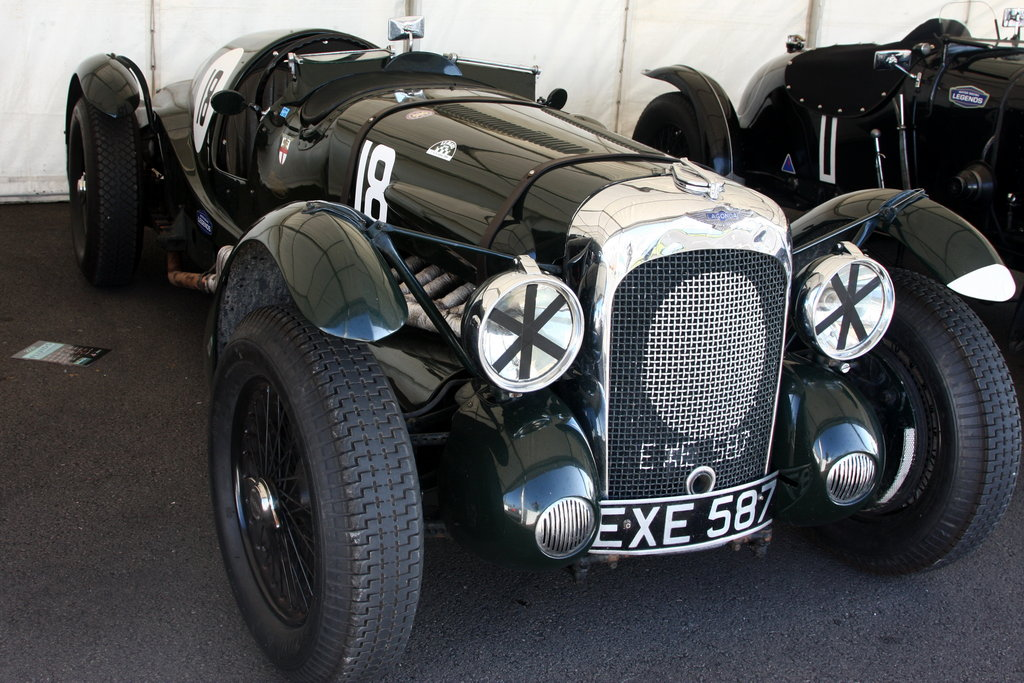
    Lagonda LG45 Le Mans

    Factory replica of new owners’ team car for the cancelled 1936 Le Mans.

    Years

    1936

    Engine

    2931/3181cc S6

    Body Style

    Tourer, saloon, limousine

    Production

    c. 570

    Power: Weight

    .

    Dimensions

    .

    Lagonda V12

    New 12-cylinder engine. A swan song for pre-war British cars, for W. O. Bentley, and for the independent Lagonda.

    Years

    1938-40

    Engine

    4480cc V12 DOC

    Body Style

    Tourer, saloon, DHC, Rapide coupé, saloon de ville, Sedanca, limousine

    Production

    189

    Power: Weight

    .

    Dimensions

    .

  • Aston Martin (from 2016)

    Aston Martin (from 2016)

    In 2013, Aston Martin signed a deal for engines and electronics with Mercedes-Benz, which made the next generation of cars possible. In 2018, Aston Martin was floated as a public company. In 2020, Lawrence Stroll announced a significant investment, which increased to a third in 2024, amid profit warnings, and the sale of the stake in the F1 team.

    Aston Martin DB11 V8 / V12

    Lighter and stiffer platform, and the first Mercedes-AMG engined Aston Martin (V8 version).

    Years

    2016-23

    Engine

    3982cc V8, 5203cc V12

    Body Style

    Coupé

    Production

    .

    Power: Weight

    .

    Dimensions

    .

    V12 has black headlight bezels, four bonnet vents, and different wheels.

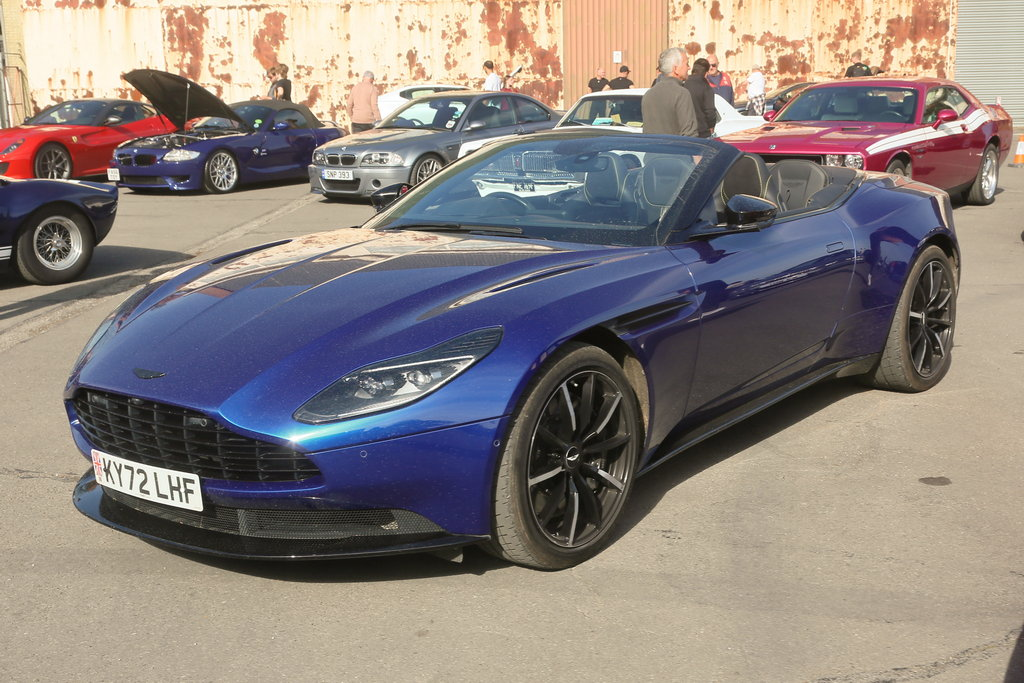
    Aston Martin DB11 Volante

    Convertible version

    Years

    2016-23

    Engine

    3982cc V8, 5203cc V12

    Body Style

    Convertible coupé

    Production

    .

    Power: Weight

    .

    Dimensions

    .

    Aston Martin DBS Superleggera

    Flagship of the DB11 era.

    Years

    2018-2024

    Engine

    5203cc V12

    Body Style

    Coupé, Volante convertible

    Production

    .

    Power: Weight

    .

    Dimensions

    .

    New front bumper, larger grille then DB11, side air extractors for brake-cooling and different hood vents

    Aston Martin Valkyrie

    Limited production hybrid sportscar racer built in collaboration with Red Bull Racing, and other manufacturers. The car had the most powerful naturally-aspirated engine ever in a production road car.

    Years

    2021-2024

    Engine

    6500cc V12 (with Cosworth)

    Body Style

    Sportscar racer, spider

    Production

    .

    Power: Weight

    .

    Dimensions

    .

    Aston Martin Vantage

    Sports-oriented car with 50/50 weight distribution.

    Years

    2018-23

    Engine

    3982cc V8, 5203cc V12

    Body Style

    Coupé, Volante roadster

    Production

    .

    Power: Weight

    .

    Dimensions

    .

    Aston Martin V12 Vantage AMR

    Track-oriented limited edition. Manual transmission previously fitted to V12 Vantage S.

    Years

    c. 2018.

    Engine

    5203cc V12

    Body Style

    Coupé

    Production

    200

    Power: Weight

    .

    Dimensions

    .

    Wheels as Rapide AMR, carbon-fibre side- and bonnet-vents and quad tailpipes.

    Aston Martin V12 Speedster

    Speedster based on Vantage

    Years

    2020 on

    Engine

    5203cc V12

    Body Style

    Coupé

    Production

    Limited to 88

    Power: Weight

    .

    Dimensions

    .

    Photo: Wikipedia

    Aston Martin DBX

    SUV, made at Aston Martin’s new facility in St Athan, Wales

    Years

    2020 on

    Engine

    3982cc V8 twin turbo M177

    Body Style

    SUV

    Production

    .

    Power: Weight

    .

    Dimensions

    .

    Aston Martin DBR22

    Inspired by the Aston Martin DB3S and pays homage to the DBR1 sports racing car, winner of the 1959 Le Mans.

    Years

    2022

    Engine

    5203cc V12

    Body Style

    Speedster racer

    Production

    .

    Power: Weight

    .

    Dimensions

    .

    Photo: Wikipedia

    Aston Martin DB12

    DB11 replacement with more power from the M177. V12 no longer available.

    Years

    2023 on

    Engine

    3982cc V8 twin turbo M177

    Body Style

    Coupé, Volante convertible

    Production

    .

    Power: Weight

    .

    Dimensions

    .

    Larger radiator grille, wider track, new LED headlights

    Photo: Wikipedia

    Aston Martin Vantage

    Facelift to match DB12. 30% power increase from M177 engine. More powerful S model also available from 2025. A new GT3 is also available.

    Years

    2024 on

    Engine

    3982cc V8 twin turbo M177

    Body Style

    Coupé, Volante convertible

    Production

    .

    Power: Weight

    .

    Dimensions

    .

    DB12-style grille. Different front and side air intakes from DB12

    Photo: Wikipedia

    Aston Martin Vanquish

    Flagship of the DB12 era.

    Years

    2024 on

    Engine

    3982cc V8 twin turbo M177

    Body Style

    Coupé

    Production

    .

    Power: Weight

    .

    Dimensions

    .

    Photo: Wikipedia

  • Aston Martin (from 2004)

    Aston Martin (from 2004)

    In 2001, CEO Ulrich Bez initiated the development of the new versatile ‘VH’ architecture using bonded and riveted aluminium, and sharply reducing assembly time. In 2004, the dedicated Aston Martin Engine Plant (AMEP) was set up within the Ford plant in Cologne. These developments made possible a new generation of cars at unprecented volumes, starting with the DB9. In 2005, Aston Martin Racing debuted at Sebring. In 2007, a new consortium purchased Aston Martin from Ford, which was divesting its specialist brands.

    Aston Martin DB9

    Important new platform, returning to extensive aluminium use, along with composites. Swan-wing doors. DB8 name avoided as it’s a V12 and also not an evolution from the DB7.

    Years

    2004-09

    Engine

    5935cc V12

    Body Style

    Coupé

    Production

    .

    Power: Weight

    .

    Dimensions

    .

    Minor facelift in 2008 – wheels, mirrors, grille

    Aston Martin DB9 Volante

    Convertible version.

    Years

    2004-16

    Engine

    5935cc V12

    Body Style

    Convertible

    Production

    .

    Power: Weight

    .

    Dimensions

    .

    Aston Martin DB9 (2010)

    Facelift and interior update. Adaptive dampers.

    Years

    2010-12

    Engine

    5935cc V12

    Body Style

    Coupé

    Production

    .

    Power: Weight

    .

    Dimensions

    .

    Subtle facelift: new front bumper, bright grille, reshaped lower intake with a hexagonal-shaped mesh, new headlights with bezels, new side sills, 20″ wheels.

    Aston Martin Virage (2011)

    Virage was designed to occupy the narrow space between the DB9 and the more powerful and aggressive DBS. It was available as a two-seater or a 2+2 design.

    Years

    2011-2012

    Engine

    5935cc V12

    Body Style

    Coupé, Volante convertible

    Production

    .

    Power: Weight

    .

    Dimensions

    .

    Photo: Wikipedia

    Aston Martin DB9 (2012)

    Design refresh which also replaced the Virage, from which it adopted many stylistic cues. Increased power. GT version from 2015.

    Years

    2012-16

    Engine

    5935cc V12

    Body Style

    Coupé

    Production

    .

    Power: Weight

    .

    Dimensions

    .

    enlarged headlight clusters with bi-xenon lights and LED daytime running strips, five-bar grille, new integral rear spoiler

    Aston Martin DB10

    The Aston Martin DB10 is a bespoke grand tourer specially developed for the James Bond film Spectre.

    Years

    2014-15

    Engine

    4700cc V8

    Body Style

    Coupé

    Production

    10

    Power: Weight

    .

    Dimensions

    .

    Photo: Wikipedia

    Aston Martin One-77

    Flagship supercar, featuring a full carbon fibre monocoque chassis (by Multimatic), a handcrafted aluminium body, and the most powerful natually asprirated engine (Cosworth-modified).

    Years

    2009-2012

    Engine

    7312cc V12

    Body Style

    Coupé

    Production

    77

    Power: Weight

    .

    Dimensions

    .

    Photo: Wikipedia

    Aston Martin Victor

    Coachbuilt version of One-77

    Years

    .

    Engine

    .

    Body Style

    Coupé

    Production

    .

    Power: Weight

    .

    Dimensions

    .

    Photo: Wikipedia

    Aston Martin Vantage Coupé (2005)

    Designed as a more lean and agile sporty Aston with a Jaguar-based V8 engine, built at AMEP.

    Years

    2005- ?

    Engine

    4300cc V8

    Body Style

    Production

    .

    Power: Weight

    .

    Dimensions

    .

    Aston Martin Vantage Roadster (2006)

    Convertible version.

    Years

    2006-17

    Engine

    4300cc V8

    Body Style

    Production

    .

    Power: Weight

    .

    Dimensions

    .

    Aston Martin Vantage N400 / N420 / N430

    Similar to its predecessors, the N430 was based on the V8 Vantage with the ‘S’ 430 bhp V8 engine, ‘S’ suspension and unique styling features, Had the 6-speed manual or Prodrive 7-speed paddle shift.

    Years

    2007, 2010, 2014

    Engine

    4300/4700cc V8

    Body Style

    Coupé, Roadster

    Production

    N400: 480

    Power: Weight

    .

    Dimensions

    .

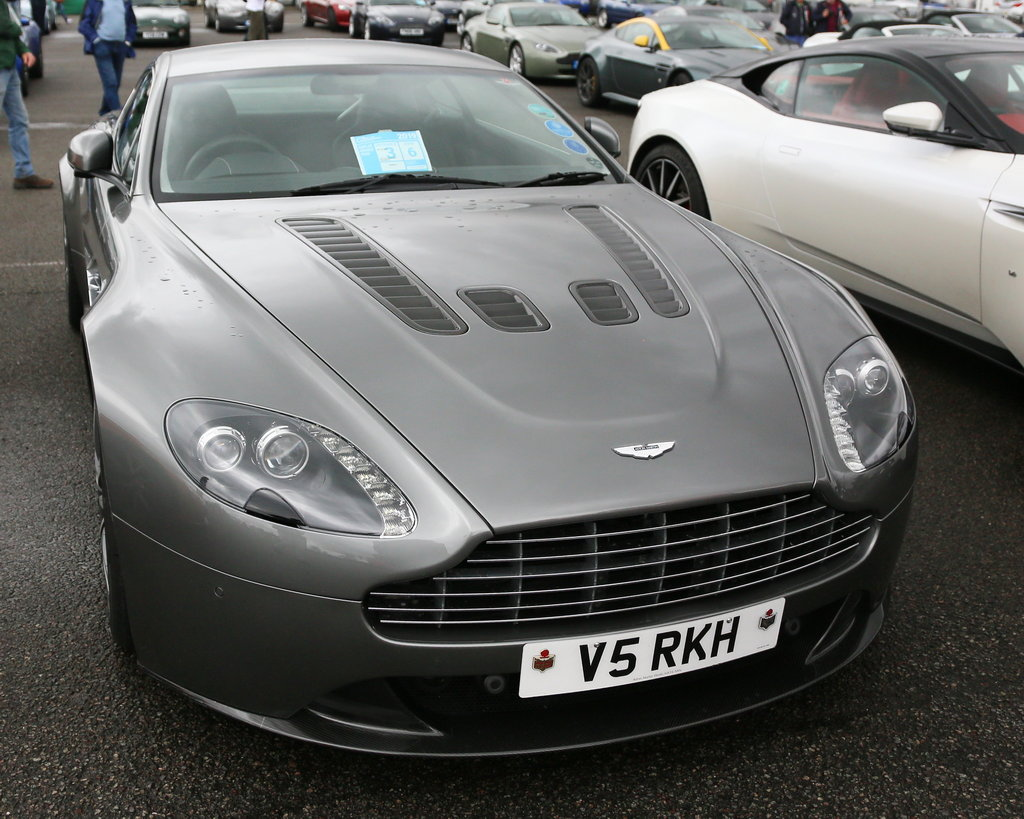
    N430 shown

    Aston Martin Vantage S

    Stiffened suspension, more power, uprated aero. Sportshift II 7-speed gearbox is faster and and lighter.

    Years

    2011-17

    Engine

    4700cc V8

    Body Style

    Coupé, Roadster

    Production

    .

    Power: Weight

    .

    Dimensions

    .

    Aston Martin V12 Vantage

    V12 powered version of the sporty Vantage, this time more expensive than the DB9.

    Years

    2009-12

    Engine

    5935cc V12

    Body Style

    Coupé, Roadster

    Production

    .

    Power: Weight

    .

    Dimensions

    .

    New rear diffuser, retractable rear wing, carbon-ceramic brakes, carbon fibre boot lid and vented bonnet.

    Aston Martin V12 Vantage S

    More power, custom exhaust, better brakes, adaptive damping and track mode.

    Years

    2013-18

    Engine

    5935cc V12

    Body Style

    Coupé

    Production

    .

    Power: Weight

    .

    Dimensions

    .

    Carbon fibre front grille, black roof and rear grille, lightweight forged alloy wheels.

    Aston Martin V12 Vantage S Roadster

    Convertible version.

    Years

    2013-18

    Engine

    5935cc V12

    Body Style

    Roadster

    Production

    .

    Power: Weight

    .

    Dimensions

    .

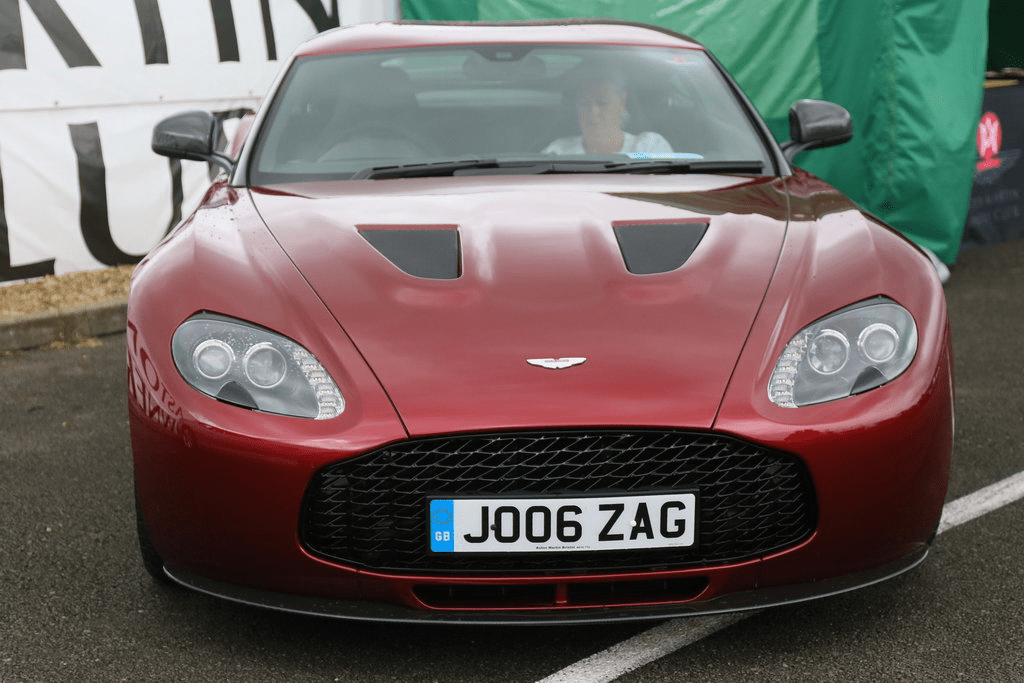
    Aston Martin V12 Zagato

    Handcrafted aluminium body with heavily modified middle, roof and rear section to reflect Aston Martin and Zagato design language. Racing concept with a limited number of street-legal examples.

    Years

    2011

    Engine

    5935cc V12

    Body Style

    Coupé, Roadster

    Production

    .

    Power: Weight

    .

    Dimensions

    .

    Aston Martin Vantage V600

    Results from a special customer order for a bespoke and more powerful V12 Vantage. A tribute to the Virage-based Vantage.

    Years

    2018

    Engine

    5935cc V12

    Body Style

    Coupé, Roadster

    Production

    14

    Power: Weight

    .

    Dimensions

    .

    Photo: Wikipedia

    Aston Martin Cygnet

    Economy car based on Toyota iQ

    Years

    2011-2012

    Engine

    5935cc V12

    Body Style

    Coupé, Volante convertible

    Production

    .

    Power: Weight

    .

    Dimensions

    .

    Aston Martin Rapide

    Saloon car on extended DB9 VH platform. Made by Magna Steyr in Austria.

    Years

    2010-2012

    Engine

    5935cc V12

    Body Style

    Saloon

    Production

    .

    Power: Weight

    .

    Dimensions

    .

    Aston Martin Rapide S

    Faster version. Made at Gaydon.

    Years

    2013-18

    Engine

    5935cc V12

    Body Style

    Saloon

    Production

    .

    Power: Weight

    .

    Dimensions

    .

    Much larger grille.

    Aston Martin Rapide AMR

    Final and fastest Rapide. 21″ wheels and ceramic brakes.

    Years

    2018-20

    Engine

    5935cc V12

    Body Style

    Saloon

    Production

    210

    Power: Weight

    .

    Dimensions

    .

    Optional carbon fibre elements, and vibrant colour accents

    Aston Martin Lagonda Taraf

    Designed by Marek Reichman and considered “the finest of fast cars” by Aston Martin, the was intended primarily for the Middle Eastern market.

    Years

    2015

    Engine

    5935cc V12

    Body Style

    Coupé

    Production

    120

    Power: Weight

    .

    Dimensions

    .

    Photo: Wikipedia

    Aston Martin DBS

    GT flagship based on the DB9. Volante from 2009, with motorised retractable cloth roof.

    Years

    2007-2012

    Engine

    5935cc V12

    Body Style

    GT coupé (& 2+2), GT Volante convertible (& 2+2)

    Production

    .

    Power: Weight

    .

    Dimensions

    .

    Aston Martin Vanquish (2012)

    New flagship. Improved torsional rigidity with carbon fibre subframes and bodywork.

    Years

    2012-2018

    Engine

    5935cc V12

    Body Style

    Coupé, Volante convertible

    Production

    .

    Power: Weight

    .

    Dimensions

    .

    Aston Martin Vulcan

    Two-seat, high-performance lightweight track-only car designed by Marek Reichman, taking inspiration from current models such as the Vantage, the DB9 and the One-77. It was priced at US$2.3 million.

    Years

    2012-2018

    Engine

    6949cc V12

    Body Style

    Coupé racer

    Production

    24

    Power: Weight

    .

    Dimensions

    .

    Photo: Wikipedia